
2026 Top Granular Tomato Fertilizer Types for Global Buyers
Global tomato growers are reassessing fertilizer choices for 2026. Crop prices fluctuate, while labor, freight, and input costs remain difficult to predict. Granular Tomato Fertilizer offers practical handling, measured application, and reliable nutrient delivery across open fields, greenhouses, and protected cultivation.
The strongest choice is rarely the most expensive bag. It depends on soil texture, irrigation quality, crop stage, and target yield. Balanced NPK granules support early rooting and steady canopy growth. High-potassium formulations can assist fruit development and firmness. Controlled-release granules may reduce application frequency, especially where rainfall or labor creates uncertainty. Calcium, magnesium, sulfur, boron, and zinc also deserve attention. Small deficiencies can appear as poor color, uneven fruit size, or weak plant structure.
Dr. Jerry Brust, a vegetable specialist with the University of Maryland Extension, advises growers to base fertilizer decisions on soil-test results rather than guesswork. That principle remains essential for global buyers.
Field experience exposes the gaps. A product that performs well in sandy soil may disappoint in heavy clay. Excessive nitrogen can produce vigorous leaves but fewer marketable tomatoes. Chloride levels, granule uniformity, moisture resistance, and packaging strength also matter during long-distance shipping. Buyers should request a complete nutrient analysis, application guidance, safety documentation, and batch traceability before approval.
This guide compares the leading Granular Tomato Fertilizer types for 2026. It also considers practical limitations, because no formulation performs perfectly everywhere. Some claims sound impressive. The soil may disagree.
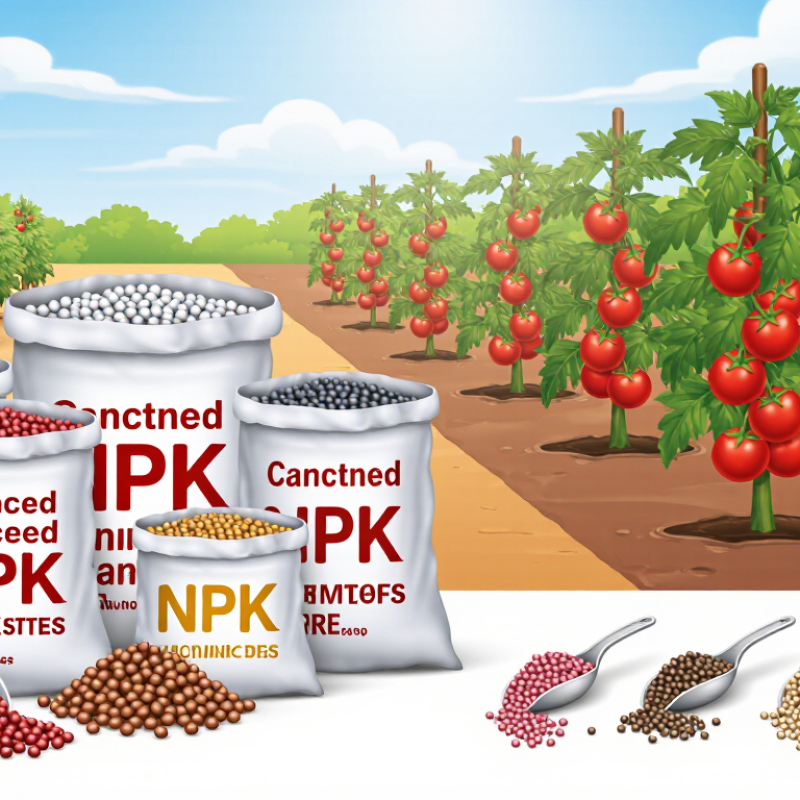
Granular Tomato Fertilizer Basics and Key Nutrient Functions
2026 Top Granular Tomato Fertilizer Types for Global Buyers
Granular tomato fertilizer supplies nutrients in measured particles that dissolve around the root zone. Common formulas include balanced NPK, high-potassium blends, calcium-rich granules, and slow-release products. Each type serves a different crop stage. Young plants need moderate nitrogen for leaves and stems. Excess nitrogen, however, can create large foliage and fewer flowers.
Phosphorus supports root growth and early flowering. Potassium helps fruit filling, color, sugar movement, and water regulation. Calcium strengthens cell walls and may reduce blossom-end rot when moisture remains consistent. Magnesium supports chlorophyll formation, while sulfur assists protein production. Micronutrients such as boron, zinc, and iron work in smaller amounts. They still matter.
Read the guaranteed analysis carefully. Do not judge quality by the NPK numbers alone. Soil tests and irrigation-water tests provide better guidance than guesswork. In practical field checks, granules that dissolve unevenly can leave pale strips beside darker plants. Particle size, coating quality, storage humidity, and application accuracy all affect performance. Keep bags dry. Apply granules beside the root zone, not against the stem. Water afterward when the product label requires it.
A simple ratio can mislead. A high-potassium formula may not solve a calcium problem. I have also seen growers add nutrients when poor drainage caused the real stress. Regional soil conditions change the answer. Test, observe, and adjust carefully.
Top Granular Fertilizer Types for Different Tomato Growth Stages
2026 Top Granular Tomato Fertilizer Types for Global Buyers
Tomato nutrition should follow plant development, not a fixed calendar. FAOSTAT reported global tomato production above 180 million tonnes in recent years, showing the crop’s major commercial importance. Yet fertilizer demand differs by soil, climate, irrigation, and cultivar.
During seedling and transplanting, use a gentle, balanced granular NPK blend with moderate phosphorus. It supports early roots without forcing weak stems. Keep granules away from young roots. In the vegetative stage, a controlled-release fertilizer with slightly higher nitrogen can build leaves and branches. Excess nitrogen remains a common mistake. It may produce lush plants, but fewer flowers. During flowering, choose a formulation with balanced nitrogen and increased phosphorus. Potassium-rich granules become more useful during fruit enlargement. Potassium sulfate suits chloride-sensitive soils, while potassium nitrate supplies both potassium and nitrate nitrogen. Calcium-containing products may help firmness, but they cannot repair poor irrigation management. IFA’s 4R framework recommends applying the right source, rate, time, and placement.
Tips: Test soil and irrigation water before purchasing bulk fertilizer. Compare nutrient percentages, granule size, release period, and chloride content. Apply smaller doses more often when rainfall is heavy. A stage chart helps, but it is not a prescription. In sandy fields, I would split applications. In heavy soil, that same plan may waste nutrients. USDA crop guidance and regional extension trials should be checked before final procurement, because local recommendations can differ sharply.
How to Compare NPK Ratios, Micronutrients, and Release Rates
Global buyers comparing granular tomato fertilizers should read NPK as a crop plan, not a ranking. Nitrogen supports canopy growth, while phosphorus assists roots and flowering. Potassium helps fruit filling, firmness, and water regulation. A 10-10-10 blend may suit early soil preparation, but fruiting plants often need a different balance. Avoid choosing the largest potassium number automatically. Soil testing matters more.
Micronutrients deserve equal attention when soils are alkaline, sandy, or repeatedly cropped. Calcium supports cell structure, magnesium supports chlorophyll, and boron affects flowering and fruit set. Iron, zinc, and manganese can become unavailable at high pH. Check each nutrient’s stated form and guaranteed analysis. Chelated forms may perform better in some soils, but they also raise costs. I would request a recent laboratory report, rather than relying only on a sales sheet.
Release rate changes how often growers apply granules and how much nutrient reaches roots. Quick-release products can correct hungry plants rapidly, yet heavy irrigation may move nutrients below the root zone. Controlled-release granules feed more steadily, especially in containers or sandy fields. Compare coating claims with trial data, particle size, dust level, and storage stability. Small details matter. A warm warehouse can alter performance. Regional temperature, rainfall, irrigation, and equipment should guide purchasing decisions. Even careful comparisons have limits; field trials may reveal results that labels cannot predict.
| Granular Fertilizer Type | Representative N-P-K Analysis (% N-% P2O5-% K2O) | Typical Nutrient Profile | Release Pattern | Best Tomato Use | Main Advantages | Buyer Checks and Limitations |
|---|---|---|---|---|---|---|
| Balanced General-Purpose Granule | 10-10-10 | Equal nitrogen, phosphate, and potash percentages. Micronutrients are usually absent unless specifically listed on the label. | Mostly quick-release, water-soluble salts. | Pre-plant soil preparation where a soil test shows broadly balanced fertility. | Simple to compare, widely available, and suitable for correcting moderate nutrient removal. | Repeated use can supply more phosphorus than needed in soils already high in phosphorus. Confirm local phosphorus regulations and soil-test results. |
| High-Phosphorus Starter Granule | 8-16-16 | Higher phosphate than nitrogen, with moderate potassium. Often supplemented with sulfur, calcium, or zinc, but these nutrients are not guaranteed unless declared. | Quick-release; phosphate is less mobile in soil than nitrate nitrogen. | Transplant establishment in soils testing low in phosphorus or with cool early-season conditions. | Supports early root development and provides moderate potassium for initial plant establishment. | Extra phosphate does not improve tomatoes when soil phosphorus is already adequate. Avoid routine use without a soil test. |
| High-Potassium Fruiting Granule | 5-10-20 | Lower nitrogen with elevated potassium; may include magnesium and sulfur in specialty formulations. | Generally quick-release, with some products using coated granules for slower nitrogen delivery. | Flowering and fruit-fill stages when nitrogen is adequate and potassium demand is rising. | Helps maintain a lower nitrogen-to-potassium supply during fruit production and reduces the risk of excessive leafy growth. | High potassium can interfere with magnesium or calcium uptake if applied excessively. Check the potassium source and chloride level. |
| Potassium-Magnesium Compound Granule | 12-12-17 + approximately 2% MgO | Moderate nitrogen and phosphate, higher potassium, and magnesium. Sulfur may also be present depending on the raw materials. | Usually quick-release; compound granules provide relatively uniform nutrient distribution. | Open-field and protected-crop production where potassium and magnesium removal is significant. | Supplies two important secondary nutrients together and can help reduce the risk of magnesium deficiency on light or sandy soils. | Verify whether magnesium is water-soluble and whether the product contains chloride. Do not treat blossom-end rot as a simple fertilizer shortage. |
| Low-Chloride Greenhouse Granule | 15-5-20 + approximately 2% MgO | Relatively high nitrogen and potassium, moderate phosphate, magnesium, and commonly added boron, iron, manganese, or zinc in chelated or soluble form. | Quick-release or partially coated, depending on the product. | Greenhouse or fertigation-support programs using low-chloride irrigation water and a controlled nutrient plan. | Provides a fruiting-oriented N:K balance and can be useful where chloride-sensitive crops are grown under protected conditions. | Confirm the chloride percentage, electrical conductivity contribution, micronutrient forms, and compatibility with the crop water and substrate. |
| Controlled-Release Coated Granule | 14-14-14 or 18-6-12 | Nutrients are enclosed in a polymer or resin coating. Some products include magnesium and a complete micronutrient package. | Gradual release commonly specified for approximately 8-12, 3-4, or 5-6 months; actual duration depends on temperature, moisture, coating, and irrigation. | Containers, raised beds, landscaping-scale tomato production, and labor-limited field programs. | Reduces application frequency and can lower the risk of large soluble-salt flushes when applied correctly. | Release periods are not universal. Request release-temperature data, coating type, recommended incorporation depth, and minimum application interval. |
| Organic-Matter-Based Granule | Commonly 5-3-4 to 8-4-6 | Nitrogen is partly or largely organic; products may provide calcium, sulfur, and small amounts of micronutrients. Nutrient availability depends on mineralization. | Slow and biologically mediated; release depends on moisture, temperature, microbial activity, and carbon-to-nitrogen balance. | Soil-building programs and production systems seeking a gradual nutrient supply. | Adds organic material or organic-derived nutrients and generally has a lower immediate salt effect than highly soluble mineral fertilizers. | Compare guaranteed analysis, source materials, pathogen controls, salinity, moisture content, and certification requirements. Lower analysis may require larger application volumes. |
| Calcium- and Nitrate-Focused Granule | 15.5-0-0 + approximately 19% Ca | Supplies nitrate nitrogen and calcium without phosphate or potassium. It is commonly used as a targeted supplement rather than a complete tomato fertilizer. | Fast-release and readily soluble. | Corrective or supplemental applications when soil or irrigation testing indicates low available nitrogen or calcium. | Allows nitrogen and calcium to be adjusted independently without adding more phosphorus or potassium. | Calcium applications do not automatically prevent blossom-end rot; consistent soil moisture and balanced root-zone nutrition are also essential. Avoid mixing concentrated calcium nitrate directly with phosphate or sulfate fertilizers. |
| Micronutrient-Enriched Complete Granule | 12-8-16 + declared micronutrients | May include boron, iron, manganese, zinc, copper, and molybdenum. Prefer labels that state each nutrient percentage and its chemical form. | Usually quick-release; micronutrient release depends on whether nutrients are sulfates, oxides, or chelates. | Soils with confirmed micronutrient deficiencies, high-pH conditions, or intensive production with frequent nutrient removal. | Provides a broader nutrient package and can reduce the need for several separate applications when the analysis matches the soil test. | Micronutrients have narrow safety margins. Avoid routine high-rate use, especially of boron and copper, without soil or tissue analysis. |
| Comparison notes: N-P-K values are shown as the conventional fertilizer-label analysis: total nitrogen (N), available phosphate (P2O5), and soluble potash (K2O). Actual tomato requirements vary with cultivar, yield target, soil texture, irrigation water, climate, and production system. Global buyers should request the guaranteed analysis, chloride content, moisture level, particle-size distribution, bulk density, release-temperature profile, safety documentation, and country-specific registration or organic-compliance documents before purchasing. | ||||||
Regional Buying Factors for Global Tomato Fertilizer Markets
For global tomato buyers in 2026, granular fertilizer selection starts with regional crop conditions, not product appearance. Mediterranean farms often seek balanced NPK granules for open-field crops and dry summers. In humid Southeast Asia, buyers may value controlled dissolution and lower caking risk during storage. Greenhouse growers usually need precise nutrient ratios, especially potassium and calcium during fruit filling. Granule size matters too. Uneven particles can separate during transport and create patchy application.
Soil tests should guide every purchase. Sandy soils may require smaller, repeated applications because nutrients move quickly after irrigation. Heavy clay soils can hold nutrients but may suffer from poor drainage and salt accumulation. Rainfall patterns change the risk. Coastal buyers should review chloride content and freshwater availability before ordering large volumes. In regions with strict fertilizer registration, documentation, nutrient analysis, and traceability can matter as much as price. Local agronomists and accredited laboratories provide stronger evidence than sales claims.
Logistics also shape the real cost. A moisture-resistant bag may protect granules during a six-week sea journey, but it cannot fix poor warehouse ventilation. Buyers should compare landed cost, minimum order size, pallet handling, and seasonal delivery windows. Small field trials remain valuable. They reveal dust, spreading accuracy, and crop response under local conditions. I would not treat one successful trial as proof. Weather, irrigation quality, and farmer technique can distort results. A second trial is sometimes wiser.
2026 Top Granular Tomato Fertilizer Types for Global Buyers
Formulations below show common guaranteed nutrient analyses used in granular tomato fertilizer programs. Regional purchasing decisions should also consider soil-test results, crop stage, irrigation method, chloride sensitivity, local registration requirements, and transport costs.
Regional buying factors: Balanced grades are commonly selected for baseline soil fertility programs; high-potassium grades are preferred where fruit quality and late-season potassium supply are priorities; high-K finisher grades suit fruit-filling stages; and controlled-release products are useful where labor, rainfall, or irrigation scheduling makes repeated applications difficult. Buyers should verify nutrient guarantees, chloride level, granule size, moisture resistance, packaging, and import compliance before purchase.
Storage, Application, and Safety Standards for Granular Fertilizers
2026 Top Granular Tomato Fertilizer Types for Global Buyers
Granular tomato fertilizers usually include balanced NPK blends, high-potassium formulas, and slow-release products. Balanced grades support early growth, while potassium-rich granules help fruit development and firmness. Calcium and magnesium may also matter where soil tests show deficiencies. A reliable purchasing decision starts with a laboratory soil report, not a colorful package.
Storage protects fertilizer quality before application. Keep sealed bags on pallets, away from rain, condensation, and direct sunlight. A dry, ventilated warehouse helps prevent caking and nutrient loss. Separate fertilizer from seeds, animal feed, fuels, and incompatible chemicals. Buyers should request an SDS, batch number, nutrient analysis, and traceability records. Local labeling, transport, and registration rules still apply. They vary by destination.
Tips: Apply granules evenly around the root zone, never against the stem. Water after application when the label permits. Wear gloves, eye protection, and suitable work clothing. Avoid dusty handling. Do not guess the rate. Overfertilization can scorch roots and increase salt stress. In practice, application errors remain common, even on experienced farms. That deserves more attention. Inspect unopened bags before use, and keep damaged packaging isolated. Use only products with clear instructions and compliant safety documentation.
