7 Best Tempura Batter Suppliers for Global Buyers
Choosing a Tempura Batter supplier is not just a price comparison. For global buyers, a dependable mix must deliver crisp, light coating across different kitchens, frying equipment, and shipping conditions. Small details matter: powder flow, water absorption, coating adhesion, and how quickly the crust softens after frying. A sample that performs well in one test may behave differently on a busy production line.
Seafood demand gives this category wider commercial relevance. The FAO’s The State of World Fisheries and Aquaculture 2024 reports that global fisheries and aquaculture production reached 223.2 million tonnes in 2022, including 185.4 million tonnes of aquatic animals. That figure is not a measure of tempura batter sales. It does, however, show the scale of food supply chains in which coated seafood may be prepared and served. Buyers should also assess ingredient transparency, allergen documentation, batch consistency, packaging suitability, and technical support—not just a supplier’s product catalogue. Ask for specifications and frying trials. Then compare results under your own operating conditions.
There is no universal “best” batter. Some buyers need a neutral flavor and fine, delicate crust; others prioritize easy preparation or stable performance in frozen applications. And these needs can conflict. A thicker coating may travel better, but it can feel heavy. The seven suppliers in this guide are assessed through practical purchasing criteria, including product range, export readiness, quality documentation, and responsiveness. Treat the shortlist as a starting point, not a guarantee. Your own recipe, equipment, and local preferences still matter.
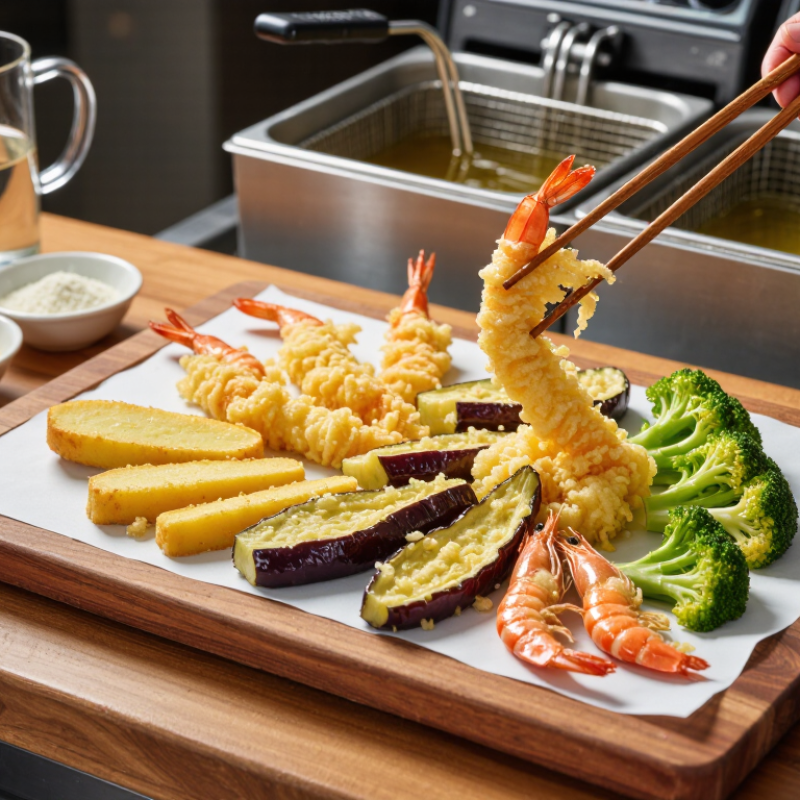
Understanding Tempura Batter and Global Buyers’ Needs
Tempura batter is not simply flour mixed with water. Its performance depends on particle size, starch balance, moisture, and how quickly it is prepared. A light, crisp coating should cling to vegetables or seafood without hiding their texture. Cold water and gentle mixing usually help limit gluten development. Small lumps are often acceptable.
Global buyers also need consistency beyond the kitchen. A supplier should provide clear ingredient specifications, allergen information, shelf-life details, and practical storage guidance. Packaging matters, too: moisture-resistant bags can help protect dry mixes during long shipments and humid storage. Buyers may also need different formats, such as ready-to-mix powder or chilled liquid batter, depending on equipment and local preparation routines. Details vary.
A sample test can reveal more than a brochure. Fry the same sliced onion or shrimp using the supplier’s recommended method, then check coating adhesion, color, crispness, and oil pickup. Record results after several minutes, not only straight from the fryer. This takes time. Yet one test cannot represent every kitchen, and recipes may need adjustment for local water, fryers, or ingredients. That uncertainty deserves attention. A dependable supplier should discuss those limits openly and respond with usable technical guidance, rather than promising identical results everywhere.
Key Criteria for Evaluating Tempura Batter Suppliers
When evaluating tempura batter suppliers, start with the product specification, not the sales pitch. Check the ingredient list, allergen information, and recommended mixing method. A clear specification should explain how much water to add and whether the batter needs chilling. Small details matter.
Ask for sample batches and test them with the ingredients used in your kitchen. Observe coating thickness, crispness, color, and how quickly the batter softens after frying. Record oil temperature and mixing time, since both can affect results. One test is rarely enough.
Supply reliability deserves equal attention. Compare minimum order quantities, production lead times, packaging sizes, and stated shelf life. Ask how the supplier handles batch changes and what documents accompany shipments. For international buying, confirm that product information and shipping paperwork meet the requirements of your destination market. Answers should be specific, not just reassuring.
A supplier may offer excellent flavor but inconsistent availability, or dependable delivery with a batter that needs adjustment. Run a trial. Have kitchen staff prepare the product using written instructions, then note where those instructions feel unclear. It is easy to overlook practical issues when reviewing a sample in ideal conditions. Choose based on repeatable kitchen results, transparent communication, and a supply plan your operation can realistically manage.
Seven Tempura Batter Suppliers Serving Global Markets
Global tempura batter suppliers differ in scale, formulation, and export experience.
Seven common options serve distinct buyer needs: regional flour mills, frozen-food manufacturers, Asian export specialists, private-label producers, foodservice wholesalers, ingredient distributors, and custom-formulation partners. Each may offer dry mixes, chilled batter, or coating systems, so confirm the product format before comparing prices.
A regional mill can provide familiar flour specifications and shorter local routes.
Frozen-food manufacturers may coordinate batter with prepared ingredients, while export specialists often understand moisture control and long-distance packing.
Private-label producers support custom packaging, but minimum orders can be substantial.
Foodservice wholesalers suit smaller trial quantities.
Ingredient distributors can combine several components in one shipment.
Custom-formulation partners may adjust crispness, color, or adhesion for a buyer’s equipment.
Ask for a current specification sheet, ingredient and allergen details, sample availability, shelf-life data, and packaging dimensions.
Useful tests are simple: fry samples at the intended oil temperature, hold them briefly, then check crunch and coating separation.
Small differences matter. Shipping conditions matter too; humidity can affect dry mixes, and delays can disrupt production.
A supplier’s reach is not proof of fit. Sometimes the sample looks excellent, yet the line behaves differently at scale. Verify quality controls and delivery terms directly, and treat early assumptions as provisional.
Comparing Supplier Products, Certifications, and Export Capabilities
Choosing a tempura batter supplier requires more than comparing price per kilogram. Request ingredient specifications, including flour and starch ratios, leavening agents, salt levels, and allergen declarations. Then test samples in your own kitchen. A batter that fries crisp at once may soften after ten minutes under a heat lamp. Small details matter.
Check food-safety credentials carefully. Ask for current third-party audit documents and confirm that certification covers the actual production site and product category. A certificate alone cannot guarantee consistent batches. Request recent quality records, traceability procedures, and a clear process for handling complaints. FAO’s Food Outlook 2024 projected the global food import bill at about US$2.1 trillion, reflecting the scale and complexity of food sourcing. That figure is not specific to batter, but it underlines why dependable documentation matters.
Export capability is another key comparison. Suppliers should explain minimum order quantities, lead times, packaging options, and how they protect powder from moisture during transit. Ask for export documents before placing a large order, and check whether product labels and ingredient statements can be prepared for your destination market. Response speed is useful evidence, though not proof of reliability. One gap often appears late: a supplier may ship internationally but offer little support when a port delay or damaged carton disrupts production.
How to Choose the Right Supplier for Your Business
Choosing a tempura batter supplier starts with the product your kitchen actually needs. Compare ingredient specifications, particle size, recommended mixing ratios, and allergen controls. Ask for recent batch documents and clear storage instructions. A polished sales sheet is not enough. Check whether the supplier can explain how the batter performs with your vegetables, seafood, or production line.
Request samples and test them under realistic conditions. Use your own water temperature, fryer, and holding time. Note coating coverage, oil uptake, color, and crispness after several minutes. Small details matter. A sample that works in a supplier’s test kitchen may behave differently in yours. One trial is useful, but it cannot reveal every seasonal variation.
For international purchasing, confirm minimum order quantities, lead times, packaging sizes, and remaining shelf life at delivery. Ask how delays or damaged cartons are handled, and whether technical support is available across time zones. Compare landed cost, not just price per kilogram. The cheapest option may create extra waste or inconsistent results. No supplier is perfect; even a strong candidate may have a slow reply or limited packaging choices. Record the trade-offs, then choose the partner whose quality and supply schedule best fit your business.
