
China Best Cash Register Receipt Paper Supplier
Choosing a China Best Cash Register Receipt Paper Supplier requires more than comparing prices and carton quantities. Retailers need paper that feeds smoothly, prints clearly, and remains readable during storage. Cash Register Receipt Paper should match the printer model, roll width, core size, and winding direction. Small mismatches can cause jams, faded lines, or wasted rolls.
Experienced suppliers usually confirm technical details before production. They may request printer samples, artwork files, or roll measurements. This practical step reduces avoidable errors. Thermal paper quality depends on coating uniformity, surface smoothness, and storage conditions. A reliable manufacturer should explain these factors clearly, not hide behind general claims. Ask about material sources, production controls, packaging, and inspection records. Documentation matters.
The best supplier is not always the cheapest. That sounds obvious, but purchasing teams still overlook it. A dependable partner can support private labeling, stable batch quality, flexible order volumes, and export packaging suited to long-distance shipping. Product samples should be tested in real checkout environments, including busy retail counters and humid storage rooms. Results may reveal issues that specifications miss. No supplier should pretend that every application is identical. Receipt paper for supermarkets, restaurants, pharmacies, and fuel stations may require different performance priorities. Careful communication, transparent quality evidence, and responsive after-sales service help buyers make a confident decision. A thoughtful sourcing process protects daily operations and strengthens customer trust.
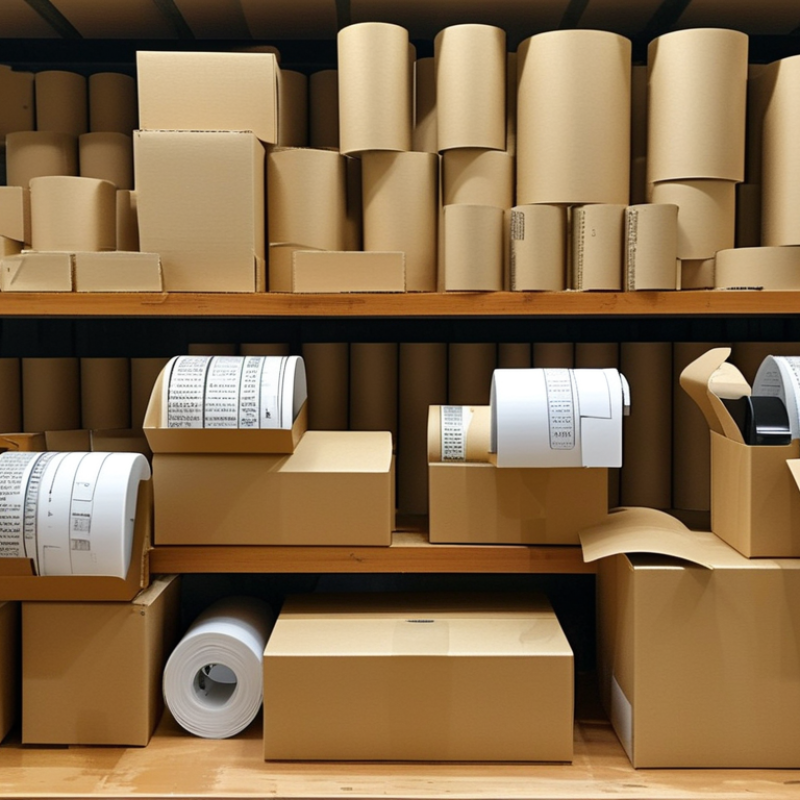
Types of Cash Register Receipt Paper Available in China
China offers several cash register receipt paper types for shops, restaurants, pharmacies, and service counters. Direct thermal paper is widely used because it prints without ink or ribbons. It suits fast checkout work and compact receipt printers. Standard rolls are available in different widths, lengths, core sizes, and paper weights. Some thermal grades use phenol-free coatings for businesses with stricter material preferences. Print clarity varies between suppliers. Test it carefully.
Carbonless receipt paper is another practical option. It creates duplicate or triplicate copies through pressure-sensitive layers. A cashier can keep one copy while giving another to the customer. These rolls or sheets usually come in white, yellow, and pink layers. They work well for delivery records, repair orders, and handwritten transactions. However, storage conditions matter. Humidity can affect copy quality.
Bond paper remains useful when receipts need long-term writing or stamping. It does not fade like thermal printing under heat, though it requires ink or ribbon printing. Experienced buyers usually check roll winding, core accuracy, coating uniformity, and edge smoothness before placing large orders. A small sample run is safer than trusting a specification sheet alone. I have found that paper appearing identical can perform differently in the same machine. That detail matters. A reliable Chinese supplier should explain material options clearly, provide consistent production data, and respond honestly when a chosen grade is unsuitable.
| Receipt Paper Type | Printing Method | Paper Structure | Common Widths | Typical Roll Length | Common Core Sizes | Typical Applications | Key Characteristics | Storage Considerations |
|---|---|---|---|---|---|---|---|---|
| Standard Thermal Receipt Paper | Direct thermal printing; no ink ribbon is required. | Single-layer heat-sensitive paper. | 57 mm, 58 mm, 76 mm and 80 mm | Approximately 15–80 m, depending on roll diameter and paper thickness. | Commonly 12 mm or 13 mm internal diameter; outer diameter varies by printer. | Retail counters, supermarkets, restaurants, pharmacies and small point-of-sale terminals. | Fast, quiet and economical for short- to medium-term receipts. | Keep away from heat, direct sunlight, moisture, plasticizers, oils and strong chemicals. |
| BPA-Free Thermal Receipt Paper | Direct thermal printing. | Single-layer thermal paper using a bisphenol-free developer system. | 57 mm, 58 mm, 76 mm and 80 mm | Approximately 15–80 m. | Commonly 12 mm or 13 mm internal diameter. | Retail, food service, healthcare, ticketing and payment receipts where bisphenol-free specifications are requested. | Designed without BPA; the exact chemical formulation should be confirmed through the supplier’s technical documentation. | Store in a cool, dry and dark location; avoid prolonged exposure to heat and strong light. |
| Phenol-Free Thermal Receipt Paper | Direct thermal printing. | Single-layer thermal paper using a phenol-free imaging system. | 57 mm, 58 mm, 76 mm and 80 mm | Approximately 15–80 m. | Commonly 12 mm or 13 mm internal diameter. | Point-of-sale receipts, self-service kiosks, transport tickets and applications with stricter material requirements. | Made without intentionally added phenolic developers according to the applicable product specification. | Confirm compliance claims, test methods and declarations before purchase; protect from heat, moisture and light. |
| High-Durability Thermal Paper | Direct thermal printing. | Thermal base paper with a protective top coating. | 57 mm, 58 mm, 76 mm and 80 mm | Approximately 15–60 m. | Commonly 12 mm or 13 mm internal diameter. | Parking receipts, transport tickets, outdoor kiosks, warehouse labels and records requiring improved resistance. | Better resistance to abrasion, moisture, oil or light than uncoated standard thermal paper, depending on the grade. | Performance depends on the coating and environment; avoid continuous outdoor exposure unless the product is specified for it. |
| Two-Ply Carbonless Receipt Paper | Impact printing with a dot-matrix or other compatible printer. | Top sheet plus self-contained carbonless copy sheet. | Commonly 57 mm, 76 mm and 80 mm; custom widths are available. | Typically 10–30 m per roll, depending on the combined thickness of the plies. | Core size must match the printer; 12 mm and 13 mm are common options. | Duplicate receipts, delivery documents, service orders and transaction records. | Produces an original and one copy without a separate ink ribbon or carbon sheet. | Keep dry and flat; excessive pressure, heat and humidity may affect image quality and paper feeding. |
| Three-Ply Carbonless Receipt Paper | Impact printing with a compatible dot-matrix or multipart-form printer. | Top sheet, middle sheet and bottom sheet for two copies. | Commonly 57 mm, 76 mm and 80 mm; custom widths are available. | Typically 8–25 m per roll, depending on paper grammage and roll diameter. | Core size and roll diameter must match the printer specification. | Invoices, delivery notes, warehouse records and transactions requiring two copies. | Creates three readable layers in one printing operation; requires suitable impact pressure. | Protect from humidity, high temperatures and heavy compression during storage and transport. |
| Colored Thermal Receipt Paper | Direct thermal printing. | Single-layer thermal paper with a colored base or colored background. | Commonly 57 mm, 58 mm and 80 mm | Approximately 15–60 m. | Commonly 12 mm or 13 mm internal diameter. | Queue tickets, promotional receipts, service counters and receipts requiring visual differentiation. | Available in selected base colors; contrast and print darkness depend on the thermal coating and printer settings. | Protect from heat and strong light because background color and printed images may change over time. |
| Recycled-Content Receipt Paper | Usually direct thermal printing; non-thermal recycled grades may require impact printing. | Paper made with a specified proportion of recycled fiber, with coating requirements depending on the grade. | Commonly 57 mm, 58 mm, 76 mm and 80 mm | Approximately 15–80 m for thermal rolls. | Commonly 12 mm or 13 mm internal diameter. | Retail and service businesses seeking a specified recycled-fiber content. | Environmental attributes vary by recycled content, coating, certification and manufacturing process. | Confirm recycled content and certification documentation; store under normal paper-storage conditions. |
| Custom-Printed Thermal Receipt Paper | Direct thermal printing with preprinted graphics, text or security elements. | Single-layer thermal paper with one- or two-sided flexographic printing. | Commonly 57 mm, 58 mm, 76 mm and 80 mm; custom sizes are possible. | Usually 15–80 m, subject to artwork, thickness and printer capacity. | Selected according to the target cash register or POS printer. | Branded retail receipts, coupons, loyalty messages, promotional offers and event tickets. | Supports preprinted layouts while retaining thermal printing on the receipt surface. | Artwork, ink suitability, winding direction and print area should be checked before mass production. |