China Top Canned Pork Manufacturers for Global Buyers?
Finding China’s top Canned Pork manufacturers requires more than comparing export prices. Global buyers need evidence of stable quality, production capacity, and responsible compliance. A factory may offer attractive quotations, yet its real performance appears in batch records, audit reports, and shipment history. Small details matter. Check the pork cut, fat ratio, can size, pull-tab design, brine formula, and sterilization method. These specifications affect taste, shelf life, freight efficiency, and customer acceptance.
Reliable manufacturers should explain their sourcing controls clearly. They should provide product specifications, ingredient declarations, allergen information, shelf-life data, and traceability procedures. Buyers should also review applicable food-safety certifications and confirm whether labels meet destination-market requirements. A sample carton can reveal much: readable batch codes, strong seams, clean printing, and undamaged cans after transport. Factory communication matters too. Prompt answers are useful, but documented answers are stronger.
A polished website proves little. Independent audits and physical inspections offer better confidence. Still, no supplier is perfect, and even experienced buyers can miss warning signs during busy procurement cycles. Lead times may change during peak seasons. Packaging materials may also require rechecking after a design update. This guide examines Chinese manufacturers through practical sourcing criteria, including product consistency, factory capability, export experience, quality management, and communication reliability. It does not treat the biggest company as the automatic best choice. The right partner should match your market, volume, budget, and compliance expectations. Careful verification remains essential before signing a long-term supply agreement.
China’s Canned Pork Industry and Global Market Position
China Top Canned Pork Manufacturers for Global Buyers?
China’s canned pork industry has grown through large-scale food processing, mature supply chains, and strong export experience. Manufacturers commonly serve wholesalers, food-service companies, emergency distributors, and retail importers. Their global position depends on more than production volume. Consistency matters.
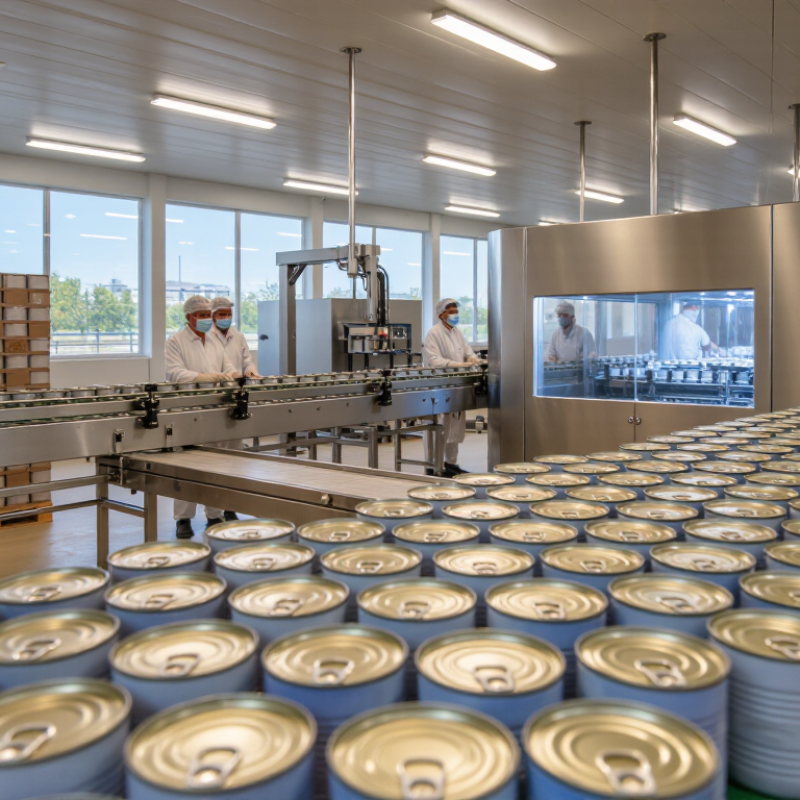
Modern facilities typically control trimming, cooking, filling, sealing, and thermal processing through documented procedures. Buyers should request production records, ingredient specifications, shelf-life data, and independent laboratory reports. Factory visits can reveal practical details, such as clean zoning, metal detection, warehouse temperature control, and carton protection. These details affect product safety and container performance.
Export-ready suppliers may offer different can sizes, meat textures, salt levels, and packaging languages. However, customization can create delays or quality variation. It is not effortless. Global buyers should compare trial samples with later batches, not rely only on catalog photographs. Clear purchase specifications should cover net weight, drained weight, country-of-origin marking, pallet patterns, and acceptable defect limits. Reliable manufacturers also explain their food-safety systems instead of making vague claims. Some factories have strong equipment but weaker communication. That gap deserves attention. Shipping conditions, port congestion, and changing import requirements can also influence final costs. A careful sourcing process balances price, verified capability, documentation, and long-term production stability.
Key Regions and Production Hubs for Canned Pork in China
China’s canned pork industry is concentrated around major livestock, processing, and logistics regions. Sichuan and Hunan are known for seasoned pork products, supported by strong food-processing traditions and nearby pork supplies. Their factories often develop savory recipes with chili, spices, or fermented ingredients.
Short supply chains matter.
Shandong and Henan offer large agricultural bases, modern cold-chain networks, and access to northern transport routes. These advantages can support high-volume production for institutional buyers and export distributors. Guangdong adds another important hub, especially for Cantonese-style preserved meats and shelf-stable prepared foods. Its ports also simplify container shipments to Southeast Asia and other markets.
Regional boundaries are not perfect. Some processors source pork nationally, then manufacture in a different province. Buyers should verify the actual factory location, not only the supplier’s office address. During evaluation, request production licenses, facility audit records, batch traceability data, and sterilization controls. Check whether cans show clear lot codes, net weight, ingredients, allergens, and production dates. A practical factory visit should include retort equipment, seam inspection, warehouse temperature records, and finished-goods sampling.
In my experience, production scale alone is a weak selection criterion. Smaller facilities may offer flexible recipes, but their documentation can be uneven.
Large plants may provide stronger systems, yet customization can move slowly. Regional mapping helps narrow the search, but it cannot replace independent testing and shipment-level verification.
Quality Standards and Certifications for International Buyers
China Top Canned Pork Manufacturers for Global Buyers?
Quality Standards and Certifications for International Buyers
International buyers should assess canned pork through documented controls, not attractive packaging alone. A reliable facility should operate a HACCP-based food safety system and maintain a current ISO 22000 certification. Some markets may also request BRCGS, IFS, or equivalent audits. Certification scope matters. It must cover the actual factory and product category.
Ask for batch-level traceability records. These should connect raw pork, ingredients, processing dates, and finished cartons. Testing should address microbiological safety, commercial sterility, heavy metals, allergens, and chemical residues. The certificate of analysis should match the shipment lot, not a previous production run. That detail is easy to overlook.
Can integrity needs equal attention. Buyers should review seam inspection records, vacuum levels, retort temperatures, and scheduled process data. Labels may require nutrition panels, allergen statements, origin details, storage conditions, and local-language text. Import requirements differ between countries, so written confirmation from the buyer’s compliance team is wise.
A certificate is not proof of perfect performance. Audits capture limited moments. Factory hygiene can change after an inspection. Buyers should request recent audit reports, corrective-action records, product samples, and independent laboratory results. I would also compare shelf-life evidence under realistic warehouse temperatures. That step is sometimes skipped, and it can expose weaknesses later. Reliability grows from repeated evidence, not one impressive document.
International Quality Standards and Certifications for Canned Pork
The chart shows the publication year of major food-safety standards and certification schemes commonly referenced by international food buyers. These frameworks support controls such as HACCP-based hazard management, hygiene, traceability, supplier approval, process control, and corrective action. Publication year is shown for reference and does not represent a quality ranking or certification result.
How to Evaluate and Select a Reliable Chinese Manufacturer
China Top Canned Pork Manufacturers for Global Buyers
Selecting a reliable Chinese canned pork manufacturer requires more than comparing quotations. China’s National Bureau of Statistics reported 57.06 million metric tons of pork production in 2023. That scale supports strong processing capacity, but it does not guarantee consistent canned quality. Buyers should verify factory ownership, production licenses, export experience, and traceability records. Ask for batch codes, ingredient specifications, thermal-processing details, and recent laboratory results. A dependable supplier should explain retort temperature, cooking time, can weight tolerance, and shelf-life testing clearly.
Audit the facility, not only the documents. Check raw-material receiving areas, cold storage temperatures, can-seaming equipment, and finished-goods warehouses. Codex food hygiene principles and HACCP provide useful benchmarks for hazard control. ISO 22000 certification can support the review, yet certification alone is not proof of daily discipline. The USDA Foreign Agricultural Service has repeatedly highlighted disease control, feed costs, and changing domestic demand as important factors in China’s pork sector. These conditions can affect pricing and supply continuity. I would request three recent production records, not one perfect sample. Small inconsistencies often reveal more than polished presentations.
Tips: Compare samples from different batches. Test drained weight, salt level, texture, can vacuum, and microbiological safety through an independent laboratory. Confirm Incoterms, recall procedures, packaging damage limits, and complaint response times in writing. A factory that avoids difficult questions may become expensive later.handzu
