How to Choose a Metal Pill Container in 2026?
Choosing a Metal Pill Container in 2026 requires more than comparing prices and polished finishes. The right container should protect tablets during commutes, travel, and ordinary daily storage. A small tin may look practical, yet its lid can loosen inside a crowded backpack. Stainless steel often provides strength and corrosion resistance, while aluminum offers lighter portability. Neither material is automatically best for every medicine or user.
This guide examines capacity, sealing performance, interior coatings, labeling, cleaning, and everyday handling. It also considers advice from pharmacists, manufacturer specifications, and real user experience. A secure screw cap can reduce accidental opening, but it does not guarantee child-resistant protection. Buyers should verify safety claims instead of trusting attractive packaging. A gasket may improve moisture resistance, although poor alignment can still allow humidity inside. That detail matters near bathrooms, beaches, or rainy train platforms.
Small details matter.
The discussion will compare compact designs with larger organizers, including how easily each model fits in a pocket. It will also explain when transferring medicine may be unsuitable. Some tablets require original packaging, specific humidity control, or clear expiry information. Ask a pharmacist before repackaging prescription or sensitive medicines. This guide is practical, but it cannot replace professional medical advice. It will acknowledge imperfect choices, because every Metal Pill Container involves trade-offs between durability, weight, privacy, and convenience. A container that feels ideal at home may become uncomfortable after eight hours of walking. That is worth testing before purchase.
What Is a Metal Pill Container and How Does It Work?
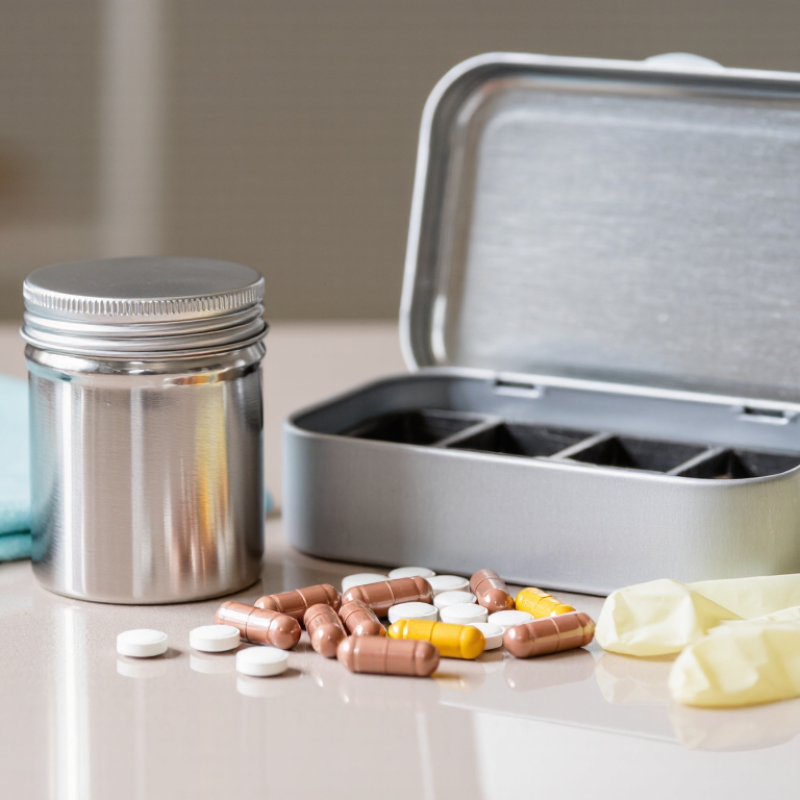
A metal pill container is a small, reusable case designed to hold tablets or capsules during short-term carrying. It usually has a hinged or screw lid, an inner compartment, and a seal that limits dust and accidental opening. The container works through physical protection, not chemical preservation. Metal resists crushing better than thin plastic, while the lid keeps loose pills together in a pocket or bag. Yet metal does not make medicine waterproof.
When choosing one in 2026, inspect the closure with clean, dry hands. A firm snap or threaded lid should close evenly without sharp edges. Look for a smooth interior, corrosion-resistant material, and enough space to avoid crushing tablets. A small silicone gasket may improve the seal, but it cannot replace correct storage instructions. Keep the original label nearby, including the medicine name, strength, expiry date, and directions. This detail is easy to overlook.
Pharmacists generally advise keeping medicines in their original packaging unless temporary separation is appropriate. Some tablets need protection from light, heat, or moisture, so a metal case may be unsuitable. Do not mix different medicines in one compartment. Keep the container away from children unless it has verified child-resistant protection. Check the case after washing it, because trapped water can cause residue or rust. A container can look sturdy and still fail at the hinge. That is the part worth questioning before daily use.
Which Materials and Designs Suit Different Storage Needs?
How to Choose a Metal Pill Container in 2026?
A metal pill container should match the storage conditions, not merely look attractive. Stainless steel suits daily use because it resists corrosion, odors, and repeated cleaning. It also feels solid in a pocket. However, thick steel can add unnecessary weight for travel. Aluminum is lighter and usually easier to carry, but it may dent after a hard drop. That small weakness matters when the lid must close tightly.
Moisture control depends on the design. Choose a container with a firm screw lid or a tested gasket, especially for humid bathrooms or outdoor trips. A smooth interior is easier to wipe and inspect. Avoid rough seams, exposed metal edges, or coatings that are already peeling. A secure hinge helps prevent accidental opening, but complicated hinges can collect dust.
I once preferred a clever multi-compartment design, then found its narrow sections difficult to clean. Practical beats clever.
For medicines sensitive to light or humidity, keep them in their original packaging unless a pharmacist confirms another container is suitable. A metal case can protect against crushing and sunlight, but it cannot replace proper storage instructions. Check that the container has enough room without forcing tablets against the lid.
Add a clear label with the medicine name and date. Small containers are convenient, yet they can encourage overfilling. That is a design mistake worth reconsidering. Reliable storage should make identification easy, cleaning simple, and everyday handling calm.
How to Evaluate Size, Portability, and Medication Capacity?
How to Choose a Metal Pill Container in 2026?
Size should match your actual medication routine, not an imagined one. Measure the largest tablet and count your daily doses for several days. A container that fits one week may still feel bulky in a pocket. A slim design can also become frustrating when tablets are difficult to remove. Leave a little empty space.
Portability depends on more than weight. Check the lid seal, hinge strength, and surface grip before buying. A secure closure should resist opening inside a bag, yet remain easy for people with limited hand strength. Rounded edges feel better against clothing. I once chose a very small container for convenience, but it was hard to open outdoors. That was not a smart trade-off.
Medication capacity must include real-world conditions. If you carry several medicines, separate compartments may prevent confusion, but they can reduce usable space. Keep tablets in their original labeled packaging when storage instructions require it, especially for medicines affected by moisture, light, or temperature. Metal may protect against crushing, but it does not automatically provide a moisture-proof environment. Ask a pharmacist before transferring any medication. Check whether the container can hold enough doses without mixing different medicines. A capacity chart sounds helpful, yet actual tablet shapes vary. Test with clean, unused sample tablets when possible. Small details matter.
What Safety and Hygiene Features Should You Check?
When choosing a metal pill container in 2026, safety should matter more than appearance. Choose food-grade stainless steel with a smooth, non-porous interior. Rough seams can trap powder, moisture, and bacteria. Avoid containers with rust spots, peeling coatings, or a strong metallic smell. The lid should close firmly without forcing. A silicone gasket can help limit humidity, but inspect it for cracks and dirt.
Hygiene depends on daily handling. Wash the container with mild soap and warm water, then dry every surface completely. Never store tablets inside while the container is damp. A narrow opening may look secure, but it can be difficult to clean. I once focused too much on compact design and missed residue around the lid threads. That mistake changed my buying checklist. Check whether the container can be opened, cleaned, and dried without special tools. Do not mix different medicines unless a qualified professional confirms that storage is suitable.
Tips: Look inside under bright light. Run a clean cotton swab along the seams. If fibers catch, choose another container. Keep the container away from heat, bathrooms, and direct sunlight. Use a clear label with the medicine name and date, especially when several containers look alike. Replace the container after deep scratches, corrosion, or a damaged seal appear. Some advice online sounds convincing but lacks testing details, so verify storage instructions with a pharmacist or the medicine’s official packaging.
How to Compare Durability, Usability, and Overall Value?
How to Choose a Metal Pill Container in 2026?
Durability begins with the metal, not the glossy finish. Stainless steel resists dents and corrosion better than thin aluminium. Aluminium is lighter, but it can bend around hinges and threads. World Steel Association data shows more than 600 million tonnes of steel are recycled globally each year. That supports steel’s circular value, but recycling does not excuse poor design. Check the lid, seam, hinge, and internal coating. A container that survives a desk drawer but leaks in a damp gym bag is not durable enough.
Usability is more personal than many product pages admit. The lid should open with one hand, yet close firmly without sharp edges. A smooth interior helps cleaning. A silicone or polymer seal may improve moisture resistance, though it can collect residue. Keep the container small enough for a pocket, but large enough to prevent crushed tablets. It should not rattle loudly during travel. Small detail, real difference. Child-resistant features may also matter; ISO 8317 provides testing requirements for reclosable packages, but certification should be verified rather than assumed.
Value means cost per useful year, not the lowest checkout price. The International Aluminium Institute reports that recycled aluminium requires about 5% of the energy used for primary aluminium production. That favors recyclable construction, but mixed materials can complicate disposal. I would compare weight, replacement seals, cleaning effort, and warranty coverage. My own preference is not perfect: a heavier container feels safer, yet becomes annoying after weeks of carrying. Measure that inconvenience honestly.
