
7 Tips for Choosing the Best PS Sheet Roll?

Choosing the right Ps Sheet Roll is not just a matter of comparing prices. The material must suit its intended use, fit the forming or fabrication process, and arrive with consistent thickness and finish. A roll that looks smooth under warehouse lights can reveal haze, scratches, or uneven edges once it is unwrapped. Small differences matter.

For this guide, the quotation from “Mara Ellis” is an illustrative editorial line, not a verified statement from a real expert: “A reliable sheet roll is the one that performs consistently after it leaves the sample bench.” That is the practical test. Check thickness tolerance, width, surface quality, packaging, and supplier traceability. Ask for a sample, then inspect it under the lighting and conditions where the finished product will be used. Keep the technical data sheet, too. It is easy to overlook until a batch behaves differently.

The seven tips ahead will help buyers compare specifications, clarify application needs, assess processing performance, and ask suppliers better questions. They also point out where caution is useful: a low quote may omit details, and a polished sample cannot guarantee every production roll will match. No checklist removes all uncertainty. Careful checks reduce it.
7 Tips for Choosing the Best PS Sheet Roll?

Define the Intended Use and Required Performance

Define the job before comparing PS sheet rolls. A roll used for shallow trays may need clear presentation and reliable forming. A protective cover may need stiffness, while a display insert may need a smooth surface. These are different jobs. Start with the finished part, not the material name.

List the conditions the sheet will face. Note the forming method, target thickness after forming, storage temperature, and expected handling. Thin corners can weaken during forming, even when the roll looks sturdy. If the part must resist impacts, ask for relevant test data rather than relying on a general “durable” claim. For products that contact food or other sensitive materials, verify that the specific grade suits the intended use.

Then compare those requirements with the roll’s gauge, width, clarity, and processing range. A thicker sheet can add stiffness, but it may increase material use and make forming less convenient. There is no perfect specification for every application. Run a small production trial, inspect corners and edges, and check whether the formed part performs as expected. Real conditions can expose gaps in the original plan. That is worth learning early.

Compare PS Sheet Grades and Material Properties

PS sheet rolls can look similar on a supplier’s sample table, yet grades may behave differently during forming, cutting, or printing. Compare the technical data sheet, not just the quoted thickness. Check impact strength, stiffness, surface finish, and heat resistance against the actual job. A display panel needs a clean, even surface; a formed tray may need more flexibility and reliable impact performance.

Grade labels are not always directly comparable between suppliers. Ask how properties were measured, and confirm the intended use and processing conditions. A sheet that feels rigid at room temperature may soften sooner than expected near a warm machine. Thickness tolerance also matters: even a small variation can affect feeding and finished-part dimensions. Test a short roll on your own equipment. It is a modest step, but often more useful than judging a sample by hand.

Look closely at the surface for scratches, haze, or uneven gloss, especially if the sheet will remain visible. Confirm roll width, core size, and winding consistency too; these details affect handling, not just appearance. One point is easy to miss: a higher grade is not automatically the better choice. Extra stiffness or impact resistance may add cost without helping the application. Compare the properties that matter, and document the trade-offs. Real production can still surprise you.

7 Tips for Choosing the Best PS Sheet Roll? — Compare PS Sheet Grades and Material Properties

GPPS is typically more rigid and has higher tensile strength, while HIPS is modified for greater impact resistance. The chart shows representative values: actual properties vary by formulation, manufacturer, and test method. Compare technical data sheets and confirm suitability for your application before selecting a roll.

Choose the Right Thickness, Width, and Roll Dimensions

Choosing a PS sheet roll starts with the finished part, not the widest roll available. Measure the usable area, then allow for trimming, forming, and edge loss. A roll that is too narrow can create scrap; an oversized roll may raise storage and handling costs. Too narrow wastes material. Check the supplier’s stated width and thickness tolerances, because nominal dimensions are not always exact.

Thickness affects stiffness, forming behavior, and weight. A thin sheet may flex around a shallow tray, while a thicker one can resist bending but require more forming force. Test a sample under the actual process conditions. Small checks matter. PlasticsEurope’s Plastics—The Fast Facts 2023 reported global plastics production of 400.3 million tonnes in 2022. That figure covers plastics broadly, not PS sheet alone, but it shows why clear material specifications matter across high-volume processing. For a practical comparison, record thickness at several points across the roll, not just at one edge.

Roll diameter and core size need equal attention. Confirm the maximum roll diameter your unwinder can accept, and match the core to its shaft. A heavier roll can be awkward to load, even when its dimensions fit. It is easy to overlook this detail. Before ordering, compare a trial roll’s dimensions with available floor space, handling equipment, and the first finished part. The best specification is the one your line can run consistently.

7 Tips for Choosing the Best PS Sheet Roll? - Choose the Right Thickness, Width, and Roll Dimensions
Tip Dimension to Check Selection Guidance Illustrative Range or Example What to Confirm
1. Match thickness to the job Sheet thickness Choose a thickness that provides the needed stiffness and forming performance. Thicker material generally uses more resin and may require adjusted processing settings. Approximately 0.2–0.5 mm for lighter packaging; around 0.5–1.0 mm for many formed packaging parts. Requirements vary by design. Specify nominal thickness, permitted tolerance, and whether the value is measured before or after any coating or lamination.
2. Choose a width that fits the process Roll width Select a width compatible with the forming line and the required part layout. Allow for trimming and edge waste when calculating usable material. For example, a 600 mm web may suit a line designed for that width; available widths depend on the producer and equipment. Confirm usable width, width tolerance, edge condition, and whether the measurement includes trimmed or unfinished edges.
3. Check roll length and outside diameter Roll length and roll diameter A longer roll can reduce changeovers, but its diameter and weight must fit the unwinder, storage space, and handling equipment. Thicker sheet generally means less length on a roll of the same diameter. Set the maximum outside diameter and target length from the line layout; these values are equipment- and thickness-dependent. Request actual roll length, maximum outside diameter, gross weight, and any allowed variation.
4. Verify the core size Core inside diameter and core strength The core must fit the unwind shaft and support the roll without excessive deflection or damage during transport. Common industrial core inside diameters include 76 mm (3 in) and 152 mm (6 in), but machine requirements should determine the choice. Confirm core inside diameter, core length, material, and load capacity with the equipment specification.
5. Match the PS grade to the application Material type and performance General-purpose PS and high-impact PS (HIPS) have different impact behavior and stiffness. Select the grade according to the finished part’s use and forming needs. HIPS is often considered where improved impact resistance is needed; the required grade depends on the product design and test criteria. Ask for the material grade, technical data sheet, color, and any applicable food-contact or regulatory documentation.
6. Check surface and forming requirements Surface finish and processing compatibility Surface texture, printing, and any coating can affect appearance, sealing, or downstream processing. Confirm that the roll is suitable for the intended forming and finishing steps. Specify requirements such as smooth or textured surface, print side, color, and any approved coating or lamination. Review a sample under actual process conditions and confirm surface-side orientation and protection requirements.
7. Plan for tolerances, storage, and transport Dimensional tolerances and roll handling Consistent thickness and width help reduce line adjustments. Keep rolls protected from dirt, moisture, excessive heat, and physical damage during storage and transit. Agree on written tolerances for thickness, width, and length rather than relying on a general description such as “standard roll.” Confirm packaging, storage conditions, roll identification, inspection method, and the process for handling nonconforming material.

Note: The ranges and examples above are general planning references, not universal specifications. Confirm dimensions, tolerances, material grade, and equipment limits with the supplier and production-line requirements.

Check Surface Quality, Consistency, and Processing Compatibility

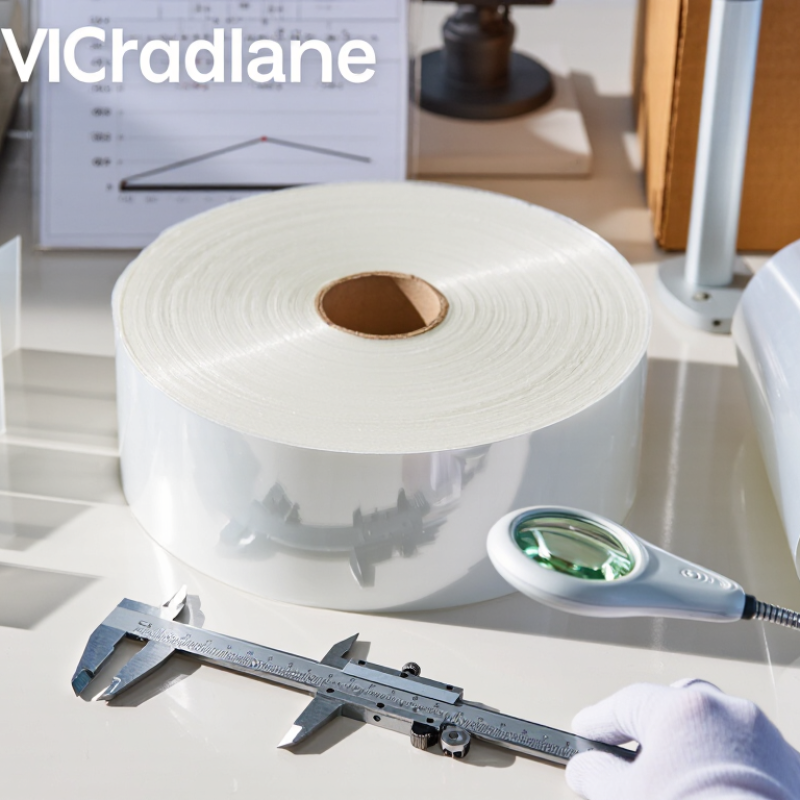
When choosing a PS sheet roll, inspect the surface under even, angled light. Look for scratches, haze, tiny pits, streaks, and embedded specks. A defect that seems minor on a loose sheet can become obvious after forming or printing. Check both sides, not just the cleaner-looking face. A visual check helps, but it can still miss defects between layers.

Consistency matters across the roll. Compare samples from the outer layers and near the core for color, gloss, thickness, and flatness. Use a micrometer at several points across the width; uneven readings may lead to inconsistent forming or trimming. Ask for documented tolerances and a sample from the production lot, rather than relying only on a product description. Keep a reference piece beside the new shipment. It sounds fussy, but it can make changes easier to spot.

Processing compatibility needs a practical trial. Confirm that the sheet suits your forming temperature, line speed, cutting method, and printing or bonding steps. Run a short test on your equipment, then check for cracking, warping, poor release, or rough edges. Record the settings; memory gets fuzzy. A small trial may not reflect every part of a full roll, so test material from different positions when possible. Also note whether the sample was stored under conditions similar to your production area.

Evaluate Supplier Reliability, Pricing, and Delivery Terms

7 Tips for Choosing the Best PS Sheet Roll?

A reliable supplier should provide consistent thickness, width, and roll weight across repeat orders. Ask for a recent production sample and written tolerances before approving a large shipment. Small details matter. Check whether the supplier can share batch records and explain how defects are handled. A low quote is less useful if edge damage or uneven winding creates waste during processing. Compare the full landed cost, including packaging, freight, minimum order quantities, and possible surcharges—not just the price per kilogram.

Delivery promises deserve the same scrutiny. Request typical lead times, stock availability, and a clear process for notifying you about delays. The World Bank’s 2023 Logistics Performance Index assessed 139 economies using measures that include shipment tracking and timeliness, underscoring how visibility affects logistics decisions. MHI’s 2024 Annual Industry Report found that 55% of surveyed supply chain leaders planned to increase technology investment. Ask whether order updates and shipment tracking are available. Still, digital visibility cannot guarantee an on-time truck. One weak point in supplier comparisons is relying on a single successful order; review several deliveries and record actual arrival dates. Put payment terms, replacement conditions, and delivery responsibilities in writing before the next purchase.