
Who Is a Top Garlic Powder Packets Supplier in China?
Choosing a top Garlic Powder Packets supplier in China requires more than comparing unit prices. Buyers need to verify garlic origin, particle size, moisture control, microbiological testing, and sachet performance. Small details matter: powder should flow cleanly from a packet, while the sealed film should resist moisture during storage and shipping.
FAOSTAT’s 2022 Crops and Livestock Products dataset records China as the world’s largest garlic producer, with output of roughly 20.7 million tonnes. That scale supports a substantial processing base, but it does not prove that any individual supplier can deliver consistent sachets. Production volume is only a starting point. Buyers should request current product specifications, batch-level test results, traceability documents, and samples packed in the intended format. A limitation is worth stating: public agricultural statistics track garlic production, not the quality or export performance of individual packet manufacturers.
Food safety belongs in the same assessment. WHO Director-General Dr. Tedros Adhanom Ghebreyesus has stated, “Food safety, nutrition and food security are inextricably linked.” For procurement teams, that principle means checking how a supplier manages hygiene, testing, packaging, and records—not relying on a polished catalogue. A supplier may look convincing on paper. Samples can tell a different story. The guide below compares the practical evidence buyers should seek before choosing a Chinese Garlic Powder Packets supplier.
What Are Garlic Powder Packets and How Are They Used?
Garlic powder packets contain dried, finely milled garlic in portion-sized sachets. They offer a quick way to season food without peeling or chopping fresh cloves. Packet sizes vary, so check the serving weight rather than assuming one sachet equals a fixed amount of fresh garlic. The powder disperses easily in marinades, soups, dressings, and dry rubs. Its flavor is concentrated, but less bright than freshly minced garlic.
The United Nations FAO’s FAOSTAT crop data records roughly 28 million metric tons of garlic production worldwide in 2022. That figure covers garlic crops, not garlic powder, and helps explain the broad agricultural supply behind dried seasonings. In practice, powder absorbs moisture readily. A sachet helps limit exposure before opening, though storage conditions and packaging quality still matter. Add it gradually to hot dishes; a small packet can taste stronger after simmering.
Tips: Sprinkle powder into oil or liquid before mixing it into a dish to reduce clumps. For roasted vegetables, start with a little, taste, then adjust. Check the ingredient list for added salt if you are monitoring sodium. And one caveat: packet portions are convenient, but they are not always precise.
How Does China’s Garlic Powder Packet Supply Chain Work?
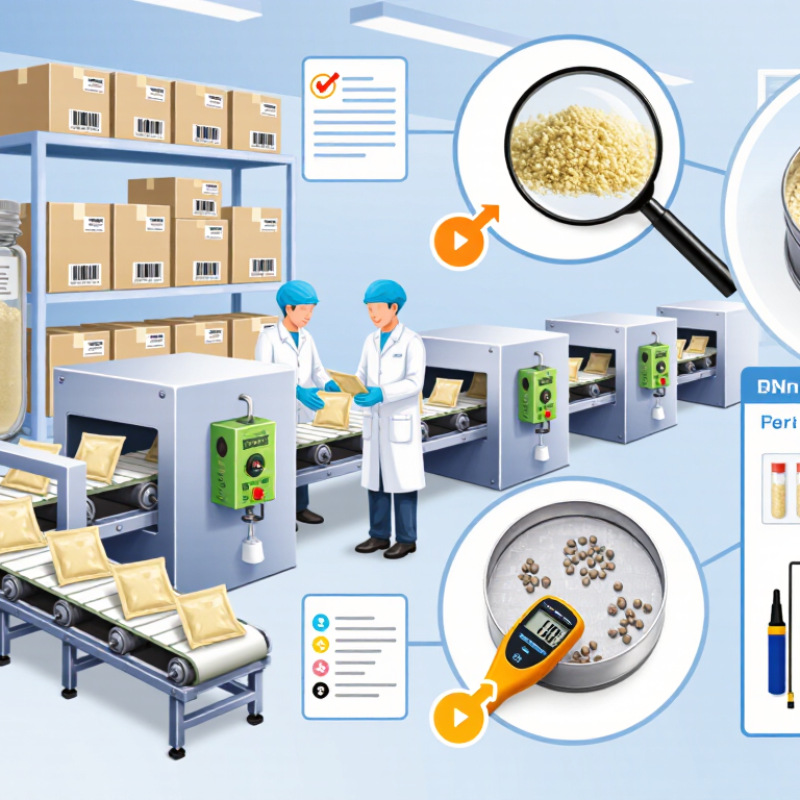
China’s garlic powder packet supply chain begins in the field, but it does not move in one straight line. FAOSTAT’s 2022 crop data records China’s garlic production at roughly 21 million tonnes, about three-quarters of the global total. After harvest, bulbs are cured, cleaned, peeled, sliced, and dried. Processors mill the dried garlic, then sieve it to meet a buyer’s particle-size requirements. Powder may be blended, tested, and packed into small sachets at a separate facility. That extra handoff matters.
For an importer, traceability should connect the farm or collection area to the finished packet. Request batch records, moisture and microbiological test results, ingredient specifications, and packaging details. The International Organization for Standardization’s ISO 22000 framework is a useful reference for food-safety management, but a certificate alone does not prove each lot meets your requirements. Ask how the supplier controls moisture during storage; humid warehouses can encourage caking and weaken aroma. The chain can be less tidy than a flowchart suggests. Small processors may use different drying schedules, so consistency needs checking.
Tips: Request a recent sample and compare its aroma, color, flow, and dissolution with your target. Confirm sachet weight tolerance and barrier-film specifications in writing. Keep the first order modest. A supplier’s paperwork can look complete, yet one production lot may still surprise you.
What Qualities Define a Top Supplier in China?
A top garlic powder packet supplier in China should show consistent product quality, clear documentation, and dependable communication. The powder should have a clean garlic aroma, an even color, and a texture suited to the buyer’s recipe. Packets should seal firmly, with readable lot codes and no visible powder around the seams. Details matter. Ask for a recent specification sheet, a sample, and batch-level test records. Compare the sample with the written product description, not just a sales photo.
Tips: Request samples from more than one production batch. Check packet weight, seal strength, and aroma after opening. Ask how the supplier controls moisture and foreign material. Keep the questions specific; vague answers are hard to verify.
A capable supplier can explain how it handles production checks, storage, and shipping preparation without relying on broad promises. Look for consistent response times and records that connect each shipment to its batch. Small differences in garlic intensity may matter in a finished blend, so agree on sensory expectations before ordering. No checklist catches everything. A pilot order can reveal packing or communication issues that documents miss. Paperwork is useful, but it is not the product.
How Can Buyers Evaluate a Garlic Powder Packets Supplier?
When evaluating a garlic powder packets supplier in China, look beyond the catalog and ask how each batch is controlled. Request a recent product specification and batch test report. Check garlic percentage, moisture level, color, aroma, and particle size. A sample should smell clean and savory, not damp or musty. Small details matter.
Ask for evidence. Confirm that test records match the batch offered, and ask how the supplier tracks raw garlic through packing. Review the packet material, seal quality, and print clarity. Press a few filled packets gently; weak seals or uneven powder weights can signal inconsistent packing. Not just promises. A short video of the packing line or a scheduled facility audit can help verify the process.
Compare quotations only after confirming the same packet size, carton count, and shipping terms. Request a pilot order before committing to larger volumes. Watch how the supplier handles questions about delays, test results, or damaged samples. A very low price can be tempting, but it may leave important details unclear. I would also admit that a neat sample does not guarantee every shipment will match it. Agree on written quality checks and keep retained samples for comparison.
Who Is a Top Garlic Powder Packets Supplier in China? - How Can Buyers Evaluate a Garlic Powder Packets Supplier?
| Evaluation Dimension | What to Check | Evidence Buyers Can Request |
|---|---|---|
| Product specification | Confirm garlic variety or origin claims, ingredient list, color, aroma, flavor, particle size, and any agreed moisture or other quality limits. | A dated product specification, representative sample, and batch-specific certificate of analysis. Agree on acceptance limits before placing an order. |
| Food safety controls | Assess the supplier’s hazard analysis, sanitation, pest control, foreign-material prevention, and process controls for the product and packing site. | A current food-safety certificate where applicable, its issuing body and scope, audit information, and relevant process-control records. Verify documents with the issuer. |
| Microbiological and contaminant testing | Check that testing covers hazards and contaminants relevant to dried garlic powder and the destination market’s rules. | Recent test reports linked to identifiable lots, with methods and laboratory details. Confirm required tests and limits against applicable import requirements. |
| Packet and packaging quality | Specify fill weight, packet dimensions, material structure, sealing method, print requirements, and protection from moisture and handling damage. | Packaging specifications, sample packets, fill-weight checks, seal-integrity test details, and confirmation that food-contact packaging complies with destination-market requirements. |
| Traceability and recall readiness | Determine whether the supplier can connect raw-material lots, production records, packing dates, and finished-goods shipments. | A sample lot-code format, traceability procedure, and records from a mock traceability or recall exercise. |
| Labeling and export documents | Review ingredient declarations, net quantity, lot identification, date marking, storage instructions, and language or labeling rules for the sales market. | A draft label for review and examples of the export documents required for the destination. Have the importer or regulatory adviser confirm local requirements. |
| Production capacity and consistency | Check whether the supplier can meet forecast volumes and maintain agreed specifications across repeat production runs. | A production plan, confirmed capacity and lead-time assumptions, sample approval process, and quality records from more than one production lot. |
| Commercial terms and communication | Compare quotations on the same basis, including packet specification, order quantity, tooling or setup charges, shipping terms, payment terms, and delivery schedule. | A written quotation with assumptions and exclusions, a production timeline, and a named contact for quality and order updates. |
| Supplier verification | Confirm the legal entity, manufacturing or packing location, and whether any production steps are subcontracted. | Business registration details, site information, written disclosure of subcontracting, and—where practical—a site audit or independent verification. |
Buyer note: A “top” supplier should be selected against the buyer’s product specification, destination-market requirements, documented evidence, and trial-order results—not price or marketing claims alone.
What Should Buyers Verify Before Placing an Order?
A top garlic powder packets supplier in China should provide clear product and production records, not just a low quote. Ask for a current specification sheet showing moisture limits, mesh size, ingredients, and packet weight. Request a batch-specific certificate of analysis and confirm which tests are performed. Details matter. Compare a physical sample with the stated color, aroma, and texture. A sample can look fine while later batches vary, so ask how batch consistency is checked.
Tips: Check that packet seals are even and the packaging protects powder from moisture. Ask for the material structure, carton count, minimum order quantity, and realistic production lead time. Verify the factory address and whether batch records can trace raw garlic to finished packets. Get the agreed specifications, tolerances, and delivery terms in writing. Small gaps happen; unclear answers deserve follow-up.
Before placing an order, confirm the supplier can support your required volume and share recent quality records. Ask how complaints, damaged cartons, or out-of-spec batches are handled. Review a pre-shipment sample when practical, and keep the approved sample for comparison. Do not rely on polished photos alone. A careful checklist takes time, and I sometimes find one overlooked detail changes the whole order.
