What Are the Top Types of Gauze Pads?
Choosing a Gauze Pad is not as simple as picking the first pack on the shelf. Wound size, drainage, location, and sensitivity all influence which type may be appropriate. Common options include woven cotton pads, nonwoven pads, sterile pads, and gauze with specialized coatings. Each has practical differences. Woven gauze has a familiar, open texture; nonwoven versions often feel smoother and shed fewer loose fibers.
The World Health Organization’s 2022 Global Report on Infection Prevention and Control estimates that healthcare-associated infections affect about 7 in 100 patients in high-income countries and 15 in 100 in low- and middle-income countries. These figures are not specific to gauze or dressing-related infections. Still, they underline why clean handling and suitable dressing selection matter. Sterile gauze is typically used when a wound requires sterile coverage, while nonsterile gauze may suit other tasks, subject to professional guidance and product labeling.
Small details count. A pad that sticks to a wound can make removal uncomfortable, while a highly absorbent option may be unnecessary for a lightly draining area. Some gauze is impregnated with substances designed to support particular dressing needs, but these products are not interchangeable. The FDA’s device listings and manufacturers’ instructions can help clarify intended uses. This guide compares the top types of Gauze Pad by material, sterility, absorbency, and typical application. No single type is best for every wound. Product descriptions can also be confusing, so check the label—and ask a qualified clinician when the wound is deep, worsening, or difficult to manage.
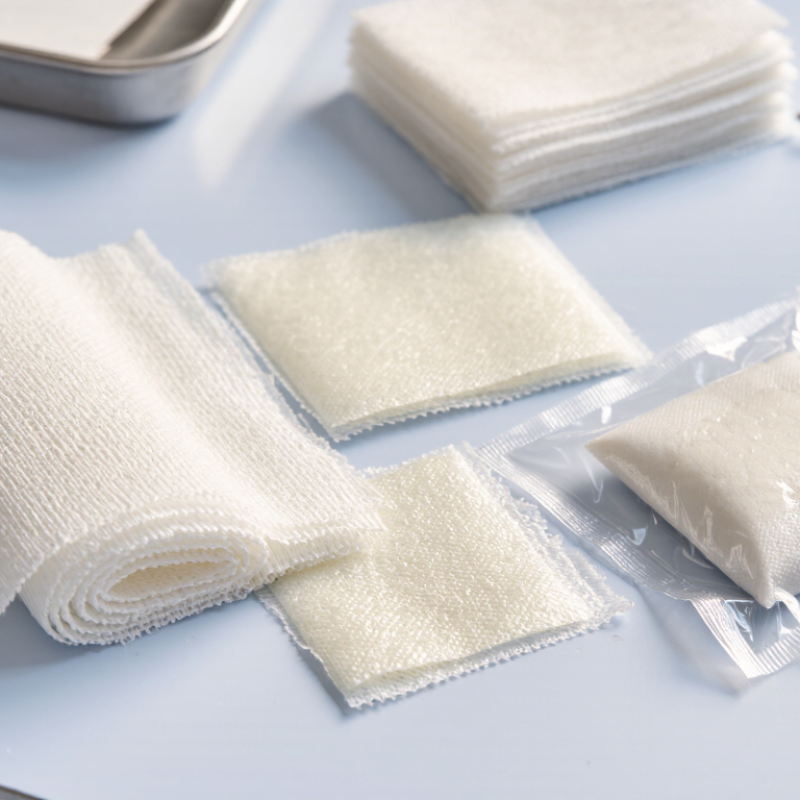
Gauze Pad Types Classified by Sterility and Construction
Gauze pads are classified in two useful ways: by sterility and by construction. Sterile pads are sealed individually or in pairs, helping protect them until a dressing change. Nonsterile pads are often sold in larger packs for cleaning intact skin or other appropriate tasks. They are not interchangeable in every situation. The CDC’s 2015 National and State Healthcare-Associated Infections Progress Report estimated that about one in 31 U.S. hospital patients had at least one healthcare-associated infection on a given day. This figure is not specific to gauze, but it underscores why clean handling and sterile supplies matter in clinical care. Check the package label and follow the care team’s instructions.
Construction changes how a pad feels and performs. Woven cotton gauze has visible crossing threads and a familiar, slightly textured surface. More layers, such as 8-ply instead of 4-ply, can increase thickness and absorbency. Nonwoven pads use bonded fibers, often with a smoother surface and less loose lint. Small differences matter. A woven edge may catch on delicate tissue, while a nonwoven pad may feel less abrasive during gentle cleaning. The categories can overlap: a pad may be sterile and nonwoven, or nonsterile and woven. Packaging does not always make that distinction obvious, so check both the sterility marking and material description.
Sterile Gauze Pads for Open Wounds
Sterile gauze pads are a practical option for covering open wounds and absorbing light to moderate drainage. They come in woven and nonwoven forms, with different sizes and ply counts. Woven cotton absorbs well, but its fibers may catch on a drying wound. Nonwoven pads often have a smoother surface, though no type suits every wound. Small details matter: a pad that is too small may let drainage reach the surrounding skin.
Keep the pad’s inner surface clean. Open the sealed packet without touching the wound-contact area, then secure the pad without wrapping too tightly. WHO’s 2022 Global report on infection prevention and control estimates that 7 in 100 hospitalized patients in high-income countries acquire at least one healthcare-associated infection; the estimate is 15 in 100 in low- and middle-income countries. These figures cover healthcare-associated infections overall, not gauze performance. Sterile packaging helps maintain cleanliness, but it cannot replace hand hygiene or proper wound assessment. That distinction is easy to overlook. For deep, heavily draining, or worsening wounds, seek professional advice; the best dressing depends on the wound and its healing stage.
What Are the Top Types of Gauze Pads? – Sterile Gauze Pads for Open Wounds
| Type | Typical construction | Common format | Typical characteristics | Useful selection notes |
| Woven gauze pads | Interlaced cotton or cotton-blend fibers | Commonly square pads in sizes such as 2 × 2, 3 × 3, and 4 × 4 inches; ply varies | Soft and absorbent; the open weave can allow airflow but may leave fibers or adhere to a wound as it dries. | Check the package for sterility, size, and ply. Use sterile pads for open wounds when a sterile dressing is indicated. |
| Nonwoven gauze pads | Typically bonded synthetic fibers, such as rayon and polyester | Available as square pads in several sizes and thicknesses | Often has a more uniform surface and may produce less lint than woven gauze; absorbency depends on the product. | Compare the product’s stated material and absorbency rather than assuming all nonwoven pads perform alike. |
| Drain sponge pads | Woven or nonwoven gauze with a pre-cut slit, often Y-shaped | Square pads designed to fit around a tube or drain | The opening lets the pad sit around a drain without cutting it. | Choose a size and slit configuration suited to the device; follow the care instructions provided by a healthcare professional. |
| X-ray detectable gauze pads | Gauze containing a radiopaque marker or thread | Available in different sizes and ply, depending on the product | Designed so the marker can be detected on an X-ray; commonly used in controlled clinical or surgical settings. | Not every gauze pad is X-ray detectable. Confirm the product label and follow facility counting and handling procedures. |
| Large gauze dressing pads | A larger, absorbent gauze pad, sometimes with multiple layers | Larger than small square gauze sponges; dimensions vary by product | Provides broader coverage and can absorb more fluid than a small pad, depending on its construction. | Check the labeled dimensions and intended use. A secondary dressing may be needed to hold the pad in place. |
General information only: product materials, sizes, ply, and absorbency vary. Check packaging for sterility and follow the wound-care guidance of a qualified healthcare professional.
Nonsterile Gauze Pads for Cleaning and General Care
Nonsterile gauze pads are useful for everyday cleaning and general care when a sterile dressing is not needed. Their soft, open weave absorbs water and helps lift light dirt from intact skin. A folded pad also gives you a convenient grip when cleaning around a small scrape. Keep it simple.
Use a fresh pad with clean water or saline, following any care instructions you have been given. Wipe gently, moving from the cleaner area toward the dirtier area. Avoid scrubbing; rough fibers can irritate sensitive skin. Change pads between passes instead of dipping a used pad back into the solution. It is an easy detail to miss.
Nonsterile means the pad has not been processed to be free of microorganisms. For that reason, it is not the right choice for placing directly on an open wound when a sterile dressing is needed. Use sterile gauze for wound coverage, or ask a healthcare professional what is appropriate. Check the package for damaged wrapping, and store unused pads in a clean, dry place. Some pads may shed small fibers, so inspect the area after cleaning and choose another option if irritation occurs.
Woven and Nonwoven Gauze Pads
Woven gauze pads are made from interlaced yarns, often cotton, with a visible mesh texture. The open weave can absorb fluid and lets air pass through. A folded pad also adds cushioning over a small area. Yet loose fibers may cling to some wound surfaces, especially when the pad dries. Removing it can feel uncomfortable. It depends.
Nonwoven gauze pads are formed from bonded fibers rather than a regular woven grid. They often feel smoother and may leave fewer fibers behind, though performance varies by material and construction. Some are soft enough for tender skin; others are designed mainly for general absorption. Not all are alike. The difference sounds neat on paper, but package details matter: check the pad’s material, absorbency, size, and whether it is sterile.
For a dressing change, consider the wound’s drainage, location, and sensitivity, along with the care instructions you were given. A woven pad may suit routine cushioning, while a nonwoven option may be preferable when lint is a concern. Neither type is automatically best. For open wounds, use a sterile pad when directed, and ask a qualified health professional if the wound is worsening or the right dressing is unclear.
Top Types of Gauze Pads: Woven vs. Nonwoven
How to read this chart: 1 means the feature is typical of that construction; 0 means it is not. Woven gauze is made from interlaced yarns, while nonwoven gauze is formed from fibers bonded into a web. These are construction differences, not ratings of quality or clinical suitability.
Specialty Gauze Pads for Specific Wound-Care Needs
Specialty gauze pads are designed for wounds that need more than simple coverage. A non-adherent pad has a smooth contact layer, so it is less likely to stick to a healing surface during a dressing change. That can make removal gentler, though it may still need a secondary pad to absorb fluid. Small detail. It matters.
For heavier drainage, alginate or hydrofiber dressings can absorb fluid and form a soft gel-like layer. They are not suitable for every wound, especially one that is dry, so selection should follow a clinician’s guidance. An abdominal pad offers a larger absorbent area after surgery, while split gauze has a cutout that fits around a drain or tube. Check that the opening sits comfortably and does not press against the skin.
Some gauze pads contain ingredients such as silver or petrolatum for specific care plans. These are not automatic upgrades; allergies, wound type, and instructions matter. Keep the package clean, and replace a pad when it becomes wet or soiled, as directed. One easy-to-miss point: a dressing that looks neat may still be too tight. If pain, redness, odor, or drainage worsens, contact a healthcare professional rather than simply changing pad types.
