
Why Are Packaging Labels Important?
Packaging Labels are often the first source of practical information a customer sees. They identify a product, explain how to use it, and help people compare options while standing in a store aisle. A clear label can make ingredients, quantity, care instructions, or origin easier to check. A cluttered one can leave shoppers guessing. Small details matter.
Research suggests that transparency can influence buying decisions. The 2016 Transparency ROI Study by FMI and Label Insight reported that 86% of surveyed consumers considered transparency important or extremely important when making purchases. It also found that 73% were willing to pay more for products offering complete transparency. These figures are useful context, not a promise that every customer behaves the same way. Expectations and shopping habits change.
Packaging Labels also support product identification and information-sharing across supply chains. GS1 standards help businesses use consistent product identifiers, which can connect a physical package with digital product data. That connection may help retailers and customers find more detailed information. Yet a barcode cannot replace readable words on a package. Nor does a polished design automatically make information trustworthy.
Consider someone checking a jar under bright store lights, looking for an allergen statement or opening instructions. Readability has real consequences in that moment. Good labels make essential details easier to find, while honest wording avoids overstating what a product can do. There is no perfect label. But careful design, verified information, and regular review can make Packaging Labels clearer, more useful, and more deserving of customer trust.
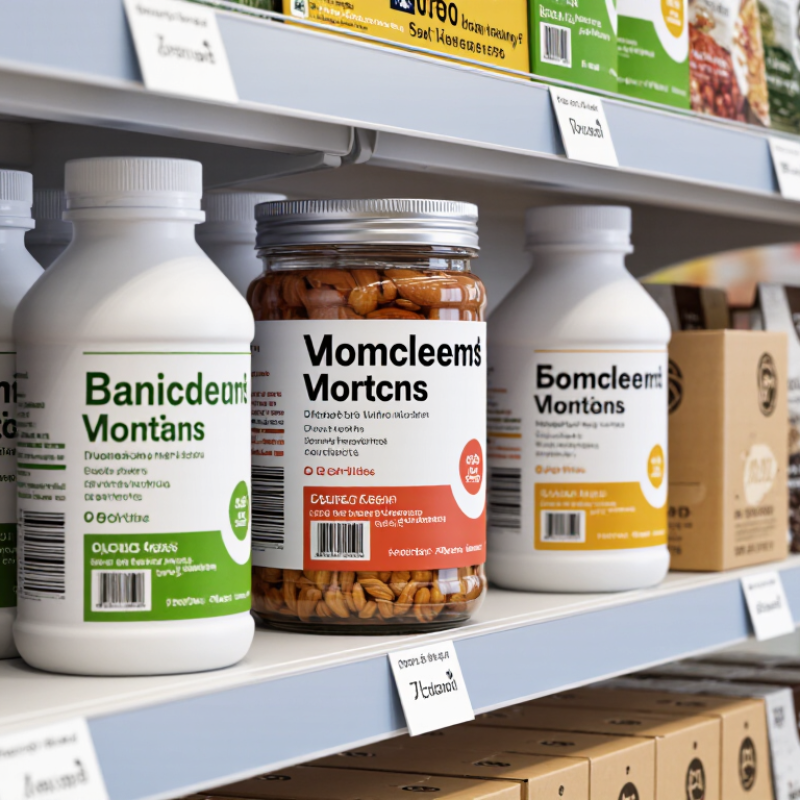
What Packaging Labels Identify: GS1 Barcodes Enable Over 10 Billion Daily Scans
Why Are Packaging Labels Important?
What Packaging Labels Identify: GS1 Barcodes Enable Over 10 Billion Daily Scans
A packaging label turns a physical item into something systems can recognize. A GS1 barcode can identify a product and support fast checkout, inventory counts, and supply-chain updates. Across the world, GS1 barcodes enable more than 10 billion scans each day. That scale depends on clear printing and reliable data, not just a barcode symbol.
A scan can connect a carton to its product record in seconds. Depending on the barcode type and the data encoded, it may also provide details such as a batch number or expiration date. These details help staff check stock, rotate older goods, and trace items through distribution. Yet a barcode alone cannot guarantee accuracy. A smudged print, a curved surface, or an outdated product record can interrupt the process. Labels are useful, but not magic.
Tips: Test labels on the actual package, under ordinary store lighting. Check barcode contrast, size, and placement with a scanner. Keep readable text nearby for people. A small test run can reveal problems; it may still miss something, so review results after launch.
| Label Dimension | What It Identifies | Common GS1 Identifier or Data | Why It Matters |
|---|---|---|---|
| Product identity | A trade item, such as a consumer product or a case of products | GTIN, encoded in formats such as EAN-13, UPC-A, or ITF-14 | Supports product lookup, checkout, ordering, and inventory records. |
| Batch or lot | A production batch or lot associated with an item | GS1 Application Identifier (10) | Helps trace affected goods during quality investigations or recalls. |
| Expiration or best-before date | A date associated with product shelf life | GS1 Application Identifier (17) for expiration date, expressed as YYMMDD | Supports date checks, stock rotation, and handling decisions. |
| Serial number | A unique instance of an item when serial-level identification is used | GS1 Application Identifier (21) | Enables item-level tracking and verification when supported by the relevant system. |
| Logistics unit | A shipping unit, such as a pallet or parcel prepared for transport | Serial Shipping Container Code (SSCC), GS1 Application Identifier (00) | Provides a unique reference for identifying and tracking a logistics unit. |
| Scannable data carrier | The machine-readable representation of identifiers and, where applicable, additional data | Examples include linear barcodes and GS1 DataMatrix or GS1 QR Code, depending on use and implementation | Allows compatible scanners and systems to capture encoded data efficiently; the printed human-readable text can provide a fallback. |
| Product information and handling | Information such as contents, net quantity, instructions, or required handling details | Printed label text and symbols; the exact requirements depend on the product and market | Helps users identify and handle products, while supporting applicable labeling requirements. |
GS1 states that its barcodes are scanned more than 10 billion times each day. The data shown on a package varies by product, packaging level, market, and implementation.
FAQS
It usually includes the food name, ingredients, allergens, and quantities of certain ingredients. It also shows net quantity, date information, storage conditions, and the responsible food business operator. Origin, use instructions, alcohol strength, and nutrition information may also be required. Details depend on the food.
Allergens should be easy to find and distinguish from nearby text. Check the printed-size label, not just a screen preview. Small details matter.
A nutrition declaration is generally required, but some foods may be exempt. Check the rules for the specific food category. I would not assume every package follows the same pattern.
They help shoppers handle food appropriately and understand its durability or use-by date. Keep dates and storage details consistent with reliable product records. A tiny print error can matter.
Identifiers can connect a physical carton with records about its origin and movement. Scans during packing, dispatch, and receipt help partners follow that trail.
Different identifiers can refer to a trade item, a logistics unit, or a location. Partners need to agree on how those identifiers connect to their records.
A smudged code or a missed scan can leave gaps. Even a well-designed system depends on consistent data entry. People get busy; that part deserves attention.
Keep codes clear on the carton’s outer face. Test them under warehouse lighting and after handling. A readable code helps, but it cannot fix incomplete records.