Why Is Earth Friendly Packaging Important?

Earth Friendly Packaging matters because a package does more than protect a product. It also uses materials, energy, and space during production, shipping, and disposal. A cardboard box, for example, may be recyclable, but oversized packaging can still waste material and increase shipping volume. Small design choices add up. So do small mistakes.

This article explores how Earth Friendly Packaging can reduce avoidable waste without compromising product protection. It considers practical options such as recycled paper, right-sized boxes, reusable containers, and materials designed for established recycling or composting systems. The right choice depends on the product, local facilities, and how customers actually dispose of the package. A compostable mailer may sound ideal, but it offers little benefit if it cannot reach a suitable composting facility. Labels matter, too. Clear disposal instructions can help, though they cannot fix an unsuitable design.

There is no perfect package. Some lower-impact materials may cost more, travel farther, or perform poorly in damp conditions. Businesses should weigh these trade-offs rather than rely on broad environmental claims. Useful questions include: What material is used? Can the package protect the product with less material? Is there a realistic reuse or recovery route? Looking closely at those details makes sustainability claims more credible—and packaging decisions more useful in everyday life.
Why Is Earth Friendly Packaging Important?

What Earth-Friendly Packaging Means

Earth-friendly packaging is designed to reduce environmental harm across its life, from material sourcing to disposal. It may use less material, recycled content, or renewable fibers. The label does not guarantee that every package is better in every setting. That matters.

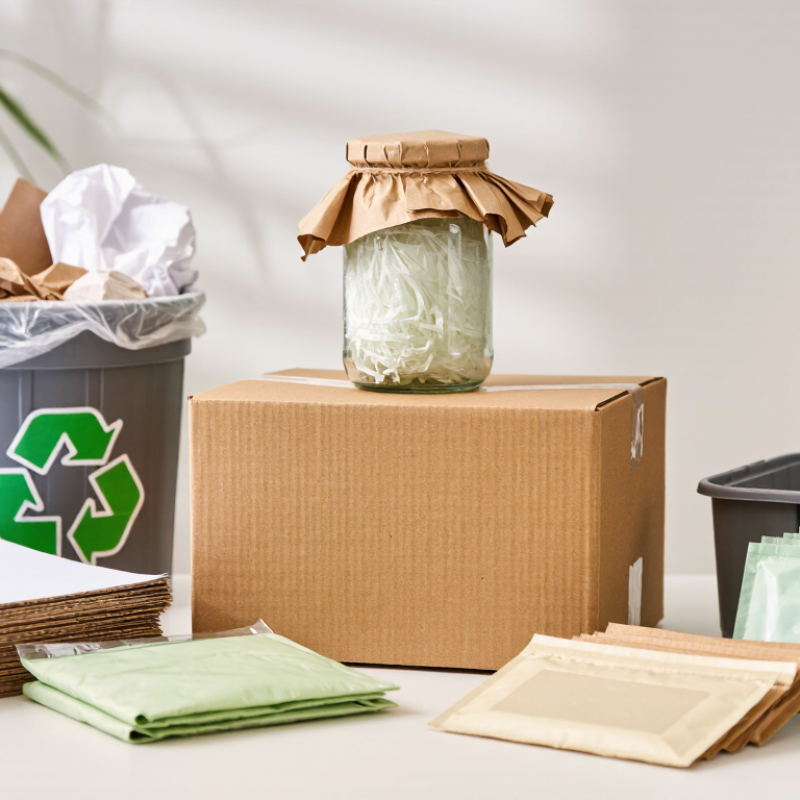
A useful example is a paper mailer made with recycled fiber. It can avoid some new raw materials, but its benefits depend on how it is made, shipped, and handled afterward. A thin package that protects a ceramic mug may prevent damage and replacement; an oversized one adds avoidable material. Reuse can also help, if the package is sturdy enough and people actually reuse it. Not always.

Disposal needs local context. A compostable pouch may require a commercial composting facility, while a paper box might be accepted in household recycling. Food residue, coatings, and mixed layers can change what facilities can process. Check the package instructions and local collection rules rather than assuming a material will disappear harmlessly. It is messy. Clear material details and realistic disposal guidance make packaging claims easier to assess, even when no option is impact-free.

Why Is Earth-Friendly Packaging Important?

What Earth-Friendly Packaging Means

Earth-friendly packaging is designed to reduce environmental impact through strategies such as using less material, enabling reuse, and making recycling or composting practical. The chart shows why thoughtful packaging matters: in 2019, only about 9% of global plastic waste was recycled, while much of the rest was landfilled, incinerated, or mismanaged. Percentages are approximate. Source: OECD, Global Plastics Outlook (2022).

How Conventional Packaging Affects the Environment

Conventional packaging protects goods, but its useful life can be brief. A snack wrapper may be opened at a desk and tossed minutes later. Its layers of plastic and foil can make sorting difficult. Small pieces escape.

The OECD’s Global Plastics Outlook (2022) estimates that the world generated 353 million tonnes of plastic waste in 2019. Only 9% was ultimately recycled. The report also shows that much plastic waste is landfilled, incinerated, or mismanaged. These figures describe plastics broadly, not packaging alone, but packaging is a major part of the problem.

UNEP’s 2023 report, Turning off the Tap, says packaging accounts for about 36% of all plastics produced. A delivery box can also arrive wrapped in film, sealed with tape, and cushioned with plastic. Paper, glass, and metal have environmental costs too, including energy and transport. A material swap is not automatically a better choice. Results depend on local collection systems, package design, and whether the package can be reused. A greasy takeaway lid or a crushed, mixed-material pouch may not fit neatly into the recycling stream. Recycling is not magic.

How Sustainable Packaging Reduces Environmental Impact

Why Is Earth-Friendly Packaging Important?

How Sustainable Packaging Reduces Environmental Impact

A shipping box can hold a product for days, then become waste in minutes. Packaging choices affect material use, transport weight, and what happens after disposal. The OECD’s Global Plastics Outlook reports that the world generated 353 million tonnes of plastic waste in 2019; only 9% was recycled. Packaging was the largest source, accounting for about 40% of plastic waste. That is a lot. Right-sized cartons, fewer layers, and materials accepted by local recycling systems can help reduce waste. Clear disposal instructions matter, too.

Sustainable packaging is not simply a switch from plastic to paper. The U.S. Environmental Protection Agency estimated that containers and packaging made up 28.1% of municipal solid waste in 2018. But a heavier alternative may require more fuel to ship, and a recyclable material helps only when collection and processing are available. The details matter. Businesses can compare materials by weight, recycled content, durability, and local end-of-life options. A small air pillow inside an oversized box may seem harmless; repeated across thousands of orders, it adds up. There is no perfect package for every product, and material choices still involve trade-offs.

Common Materials and Design Approaches

Earth-friendly packaging begins with choosing materials that protect a product without creating unnecessary waste. Recycled paperboard suits many dry goods, and molded fiber can cushion small items. Glass and aluminum are durable and widely recyclable in many places, but their weight can increase transport impacts. Plant-based films may work for specific foods, though they usually need suitable composting conditions. “Compostable” does not mean it breaks down in every backyard bin.

Good design matters as much as material choice. Right-sized boxes use less material and leave fewer empty spaces in delivery cartons. Simple folds, paper tape, and clear recycling labels can make disposal easier. Avoid combining layers that consumers cannot separate. A package may look greener but still be hard to recycle; that detail is easy to overlook. Keep it practical.

Tips: Test packaging with real products and typical shipping conditions. Check local recycling guidance before choosing materials. A smaller, sturdy box is often a better start than a complicated redesign.

Why Is Earth-Friendly Packaging Important? — Common Materials and Design Approaches
Material or approach Common uses Potential environmental benefits Trade-offs and practical considerations Design and end-of-life guidance
Corrugated cardboard Shipping boxes, protective outer packaging, and dividers. Often recyclable through established paper-recycling systems; recycled fiber can be used in many grades. Water, food residue, coatings, and mixed materials can affect acceptance. Long-distance shipping of bulky boxes adds transport impacts. Choose a box sized to the product, minimize void fill, and avoid unnecessary plastic lamination. Keep it clean and dry for recycling where accepted.
Paperboard and paper Folding cartons, sleeves, bags, labels, and lightweight wraps. Can be made with recycled fiber or responsibly sourced virgin fiber, and is recyclable in many local systems when clean and compatible. Paper production uses energy and water. Grease barriers, waxes, and plastic coatings may make some items difficult to recycle. Use the lightest grade that still protects the product. Specify recycled or certified fiber where suitable, and design coatings and inks for local recycling systems.
Molded fiber or pulp Protective inserts, trays, cushioning, and egg cartons. Can use recovered paper or other plant fibers and can replace some molded plastic protective components. Moisture resistance and shape requirements may require additives or coatings. Collection and acceptance vary by local recycling program. Use only the protection needed, avoid difficult-to-separate coatings, and check local guidance before labeling the item recyclable or compostable.
Glass Bottles, jars, and containers for foods, beverages, and personal-care products. Can be recycled repeatedly where collection and processing are available, and is compatible with reuse systems when designed for return and refill. It is heavy and breakable, so transport and protective packaging can be substantial. Recycling availability differs by location and glass color. Consider refill or reuse where practical. Use durable designs for multiple trips, and provide clear disposal guidance based on local collection rules.
Aluminum Beverage cans, foil, trays, and some small containers. Recyclable in many established systems; recycling aluminum generally requires substantially less energy than producing primary aluminum from ore. Primary production is energy-intensive. Small pieces, attached materials, and certain laminates may not be recovered in all systems. Use a simple, separable format and avoid combining aluminum with materials that prevent sorting. Make the package large enough to be captured by local collection systems.
Single-material plastic packaging Flexible films, pouches, bottles, tubs, and caps made primarily from one compatible plastic type. Light weight can reduce transport mass, and simpler material composition can improve sorting compared with complex multi-material structures. Recyclability depends on the specific format and local collection, sorting, and reprocessing capacity. Flexible films are not accepted in many curbside programs. Reduce unnecessary layers, colors, labels, and incompatible components. Verify that the complete package—not just one component—is accepted locally.
Reusable packaging Returnable bottles, refill containers, shipping totes, and durable transit packaging. Repeated use can reduce demand for single-use packaging when containers are returned, cleaned, and reused enough times. Benefits depend on return rates, reuse cycles, cleaning, transport distances, and the material and energy used for each cycle. Design for durability, easy cleaning, and convenient return. Track actual reuse cycles and provide a practical collection or refill system.
Compostable packaging Some food-service items, liners, and packaging intended for specific organic-waste systems. May be suitable where a compatible composting facility accepts the item and the package is collected with the appropriate organic waste. “Compostable” does not mean it will break down in home compost, soil, or the natural environment. Many facilities do not accept compostable packaging. Use only where a suitable collection and processing route exists. Follow applicable certification and labeling rules, and do not imply that composting is available everywhere.
Right-sizing and lightweighting Boxes, mailers, bottles, trays, and protective packaging of many material types. Using less material can reduce resource demand and shipping volume or weight while avoiding packaging that serves no useful purpose. Removing too much material can increase product damage, returns, or food waste, potentially offsetting packaging savings. Test protection under real distribution conditions. Match package dimensions to the product and reduce material without compromising safety or product quality.
Design for separation and recycling Multi-component packages such as bottles with caps, cartons with closures, and boxes with labels or inserts. Components that are easy to separate and identify can be easier for consumers and recycling systems to handle. Recycling rules and sorting technology vary by region; a technically recyclable component may not be collected locally. Keep components compatible where possible, make separation intuitive, and use disposal instructions that reflect the markets where the package is sold.

Note: A package’s environmental performance depends on its full life cycle, including material sourcing, production, transport, product protection, reuse, and locally available end-of-life systems. No material is the best choice for every product or location.

How Businesses and Consumers Can Choose Better Packaging

Earth-friendly packaging starts with using less material, not simply choosing a “green” label.

Businesses can review each product’s journey: what protects it in transit, what customers need, and what becomes waste. A smaller carton with a snug paper insert may replace layers of void fill. But reducing material too far can cause breakage and returns. That trade-off matters.

Teams can test packaging with real shipments, including damp weather, stacking, and rough handling. Track damage, package weight, and whether local collection services accept each material. Recycled content can reduce demand for virgin resources, while reusable systems may work well for nearby, repeat deliveries. They are not automatically better; washing and return transport use resources too. Details count.

Consumers can choose products with right-sized, easy-to-separate packaging and follow local sorting guidance. Flatten clean cardboard, and keep films out of paper bins unless local rules allow them. Ask sellers for less filler or consolidated delivery when practical. A refill pouch sounds efficient, though its mixed layers may be hard to recycle. Labels still confuse. Better decisions depend on clear material information, honest testing, and revisiting choices when evidence changes.